Posted on

Fondue Cheese: How to Choose the Best Cheese for a Perfect Fondue

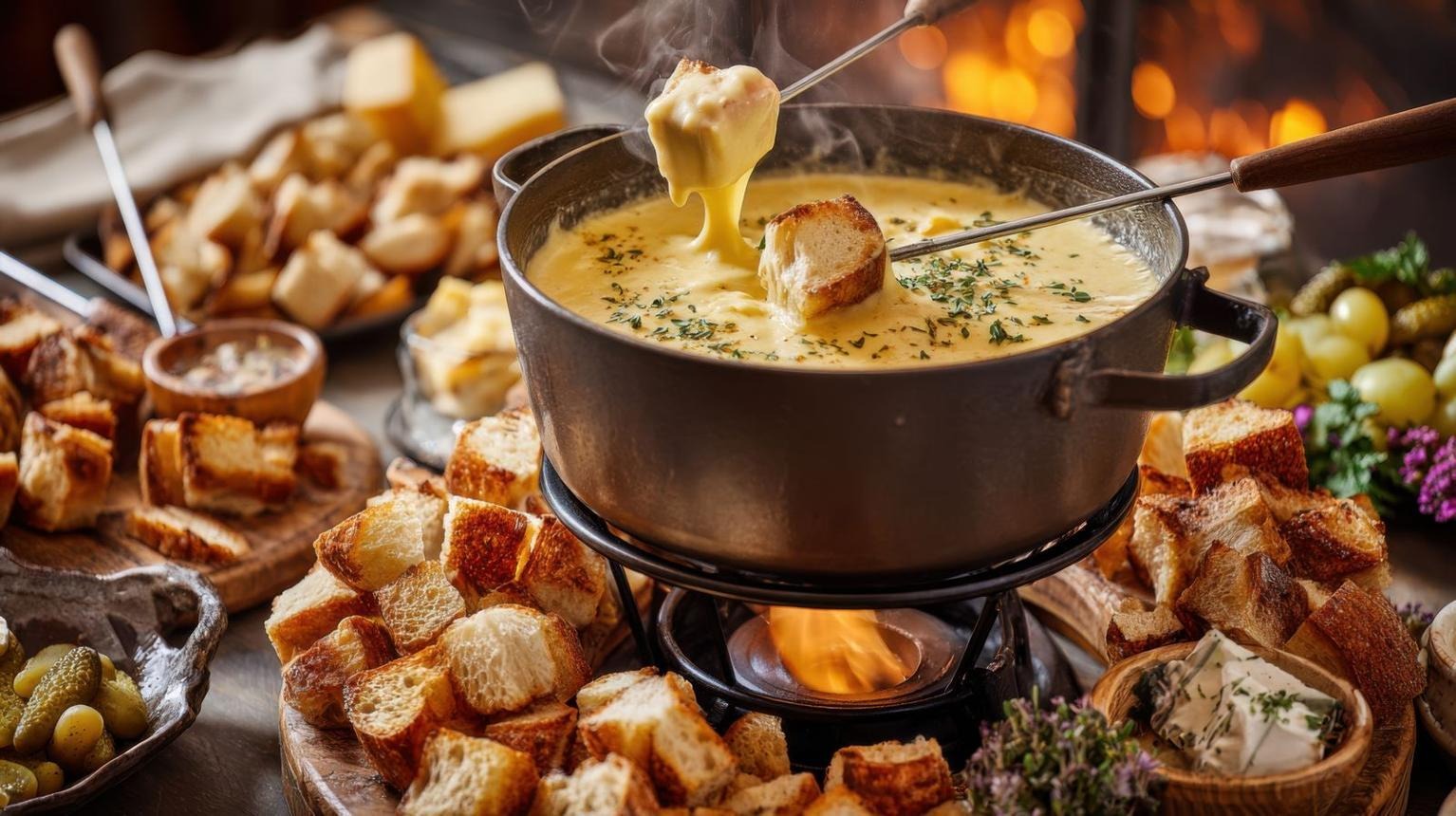
Cheese Fondue

There’s something special about gathering around a pot of warm, melted cheese and sharing a meal with family or friends. Cheese fondue is more than just a delicious dish; it’s an interactive dining experience that encourages conversation, connection and relaxed entertaining.

Originating from Alpine food traditions, cheese fondue has become a favourite for dinner parties, celebrations and cosy evenings at home.

While preparing fondue is relatively straightforward, choosing the right cheese makes all the difference. The varieties you select influence the flavour, consistency and overall enjoyment of the dish.

From traditional Gruyรจre and Emmentaler to different cheese combinations and practical preparation tips, this guide will help you choose the best fondue cheese and create a smooth, delicious result.

What Is Cheese Fondue?

Cheese fondue is a traditional Swiss dish made by gently melting cheese with liquid and other ingredients to create a smooth mixture.

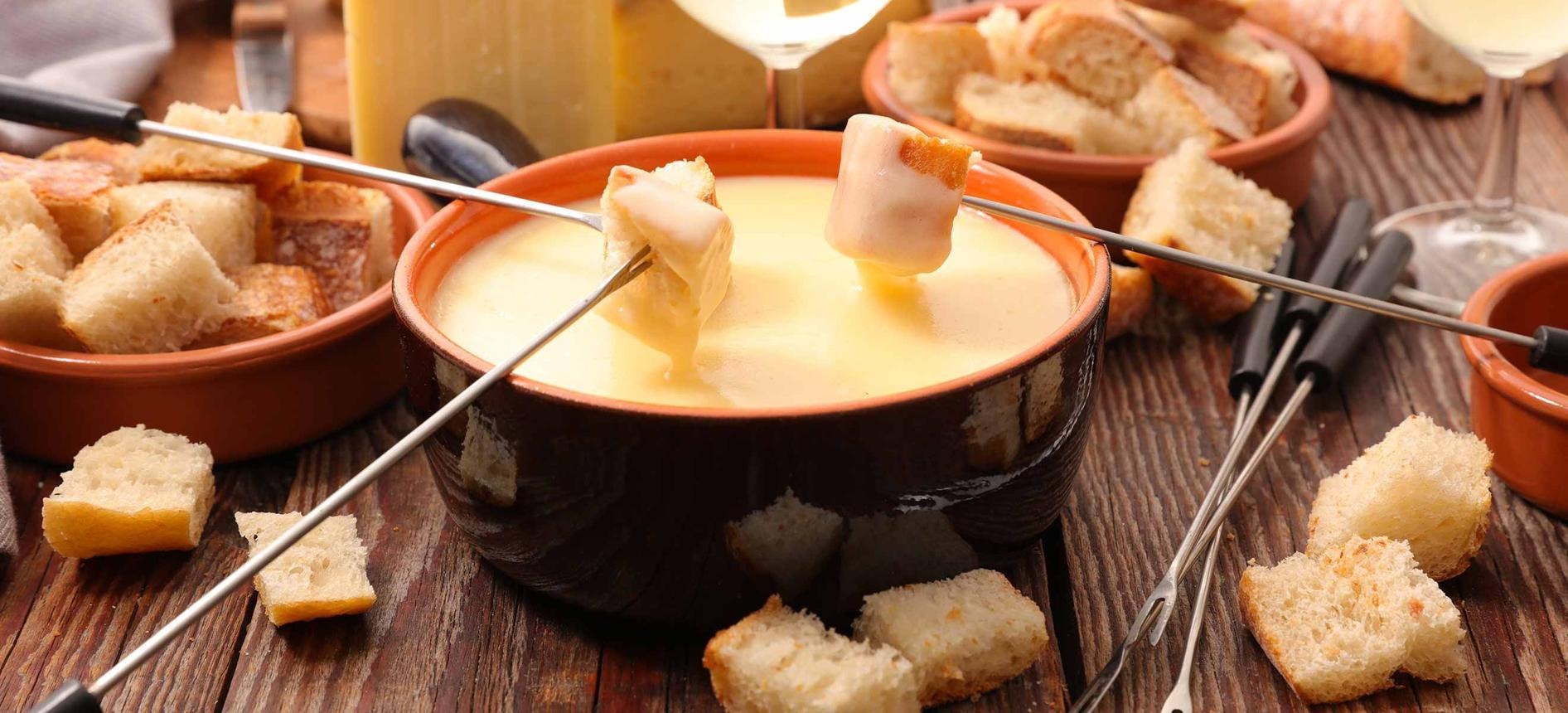
It’s typically served in a communal pot, known as a caquelon, which is kept warm at the table.

Guests use long fondue forks to dip pieces of bread into the melted cheese, although vegetables and other accompaniments can also be enjoyed.

The appeal of fondue lies in its simplicity.

Rather than preparing individual meals, everyone shares from the same pot, creating a relaxed and social dining experience.

Traditional recipes vary between regions, but Swiss cheeses such as Gruyรจre, Appenzeller, Emmentaler and Vacherin Fribourgeois are commonly associated with fondue.

What Makes a Good Fondue Cheese?

Not every cheese behaves the same way when heated.

Some melt into a smooth, creamy consistency, while others may become oily, grainy or stringy.

Choosing cheeses with suitable melting properties is essential for achieving a satisfying fondue.

Smooth Melting Texture

The best fondue cheeses melt evenly and combine into a cohesive mixture.

Alpine-style cheeses are particularly popular because their texture and composition make them well suited to melting.

Balanced Flavour

Fondue should be rich and savoury without becoming overwhelming.

Combining a stronger cheese with a milder variety can create a balanced flavour that appeals to different preferences.

Good Consistency

A successful fondue should be thick enough to coat bread while remaining smooth enough for dipping.

The consistency depends on the cheeses selected, the amount of liquid added and the temperature used during preparation.

Complementary Cheese Combinations

Using more than one variety can create greater depth of flavour.

For example, combining Gruyรจre with Emmentaler provides a mixture of rich, nutty and mild characteristics.

1. Gruyรจre: A Traditional Favourite for Cheese Fondue
Fondue Cheese

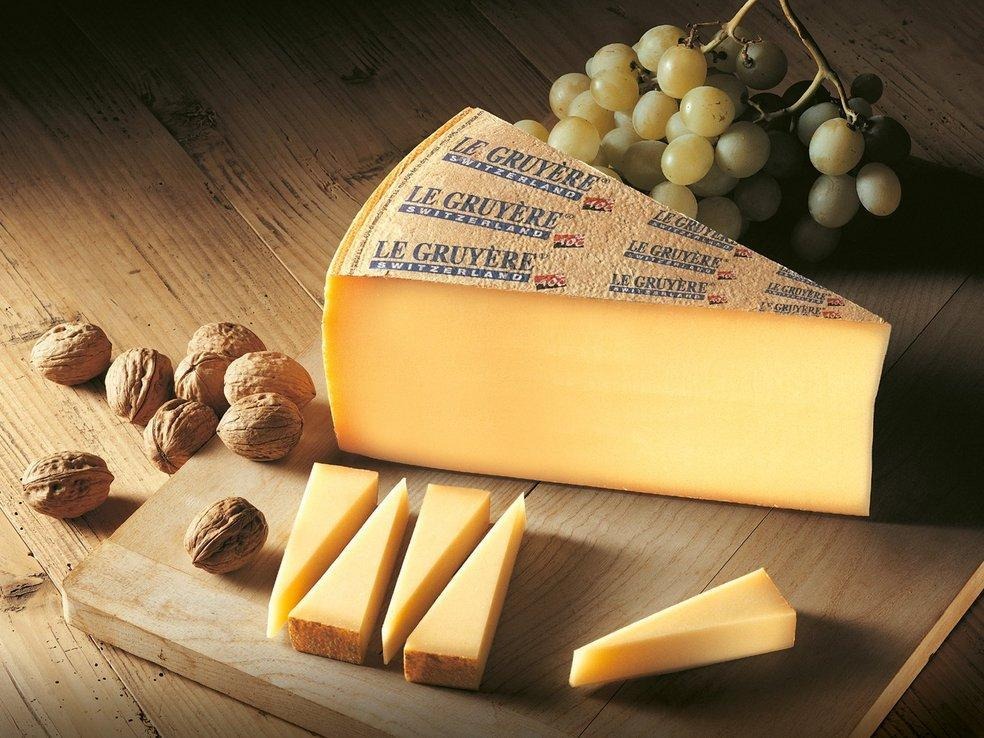
Gruyรจre is one of the most popular cheeses used in traditional Swiss fondue.

Its rich, savoury flavour and excellent melting qualities make it a reliable foundation for many recipes.

Depending on its maturity, Gruyรจre can offer nutty, slightly sweet and more pronounced savoury notes.

Why Gruyรจre Works Well in Fondue

Gruyรจre provides a distinctive flavour without needing large quantities of additional ingredients.

When combined with suitable liquid and heated gently, it can create a smooth, creamy texture.

It also pairs well with other Swiss-style cheeses, allowing you to customize the strength and character of your fondue.

What to Pair With Gruyรจre

For a traditional approach, combine Gruyรจre with Emmentaler.

For a richer fondue, Gruyรจre can also be paired with Vacherin Fribourgeois where available.

The best combination depends on whether you prefer a mild, nutty fondue or something with a more pronounced flavour.

2. Emmentaler: A Mild and Nutty Fondue Cheese

Emmentaler is another traditional Swiss-style cheese frequently used in fondue recipes.

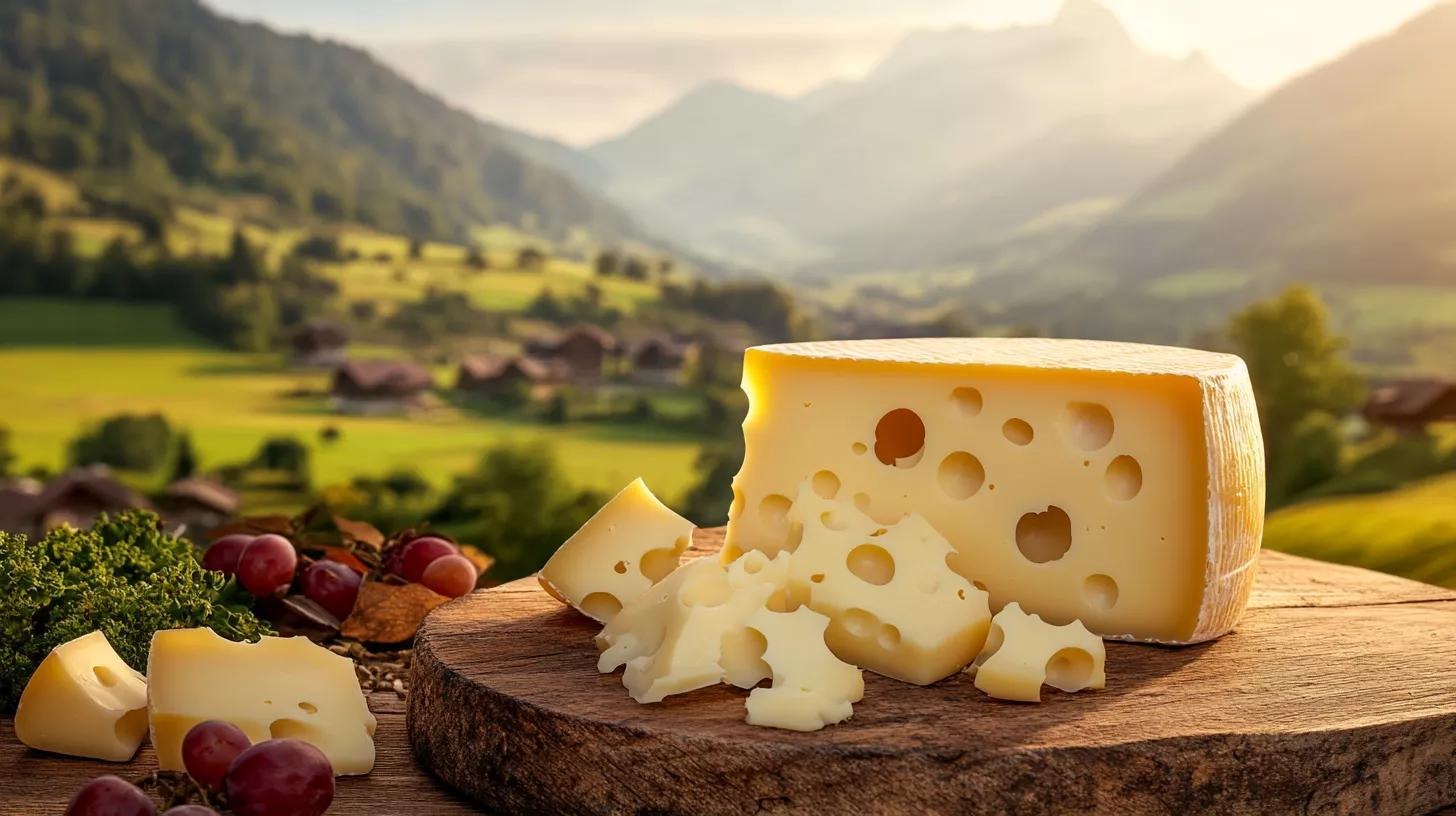
Recognised for its distinctive holes and mild, nutty flavour, Emmentaler provides a more delicate character than many aged cheeses.

Why Emmentaler Is a Good Choice

Emmentaler melts well and can help create a balanced flavour when combined with richer varieties.

Its relatively mild taste makes it particularly useful for gatherings where guests may not enjoy very strong cheese.

Combining Emmentaler With Gruyรจre

One of the most approachable fondue combinations is Gruyรจre and Emmentaler.

Gruyรจre contributes richness and savoury depth, while Emmentaler provides a milder, nutty character.

A mixture of approximately equal parts is a practical starting point, although you can adjust the proportions to suit your preferences.

For a stronger fondue, increase the amount of Gruyรจre.

For a milder version, use slightly more Emmentaler.

3. Vacherin Fribourgeois: A Creamy Swiss Fondue Option

Vacherin Fribourgeois is another cheese traditionally associated with Swiss fondue.

It’s particularly well known for its use in moitiรฉ-moitiรฉ, a Swiss fondue style combining Gruyรจre and Vacherin Fribourgeois.

The name refers to the use of approximately half of each cheese.

Why Vacherin Fribourgeois Is Popular

Vacherin Fribourgeois contributes a creamy texture and distinctive flavour.

When combined with Gruyรจre, it creates a rich and satisfying fondue.

This combination is particularly appealing to those who enjoy traditional Swiss cheese dishes.

When to Choose This Combination

A Gruyรจre and Vacherin Fribourgeois fondue is an excellent option for a special dinner or an authentic Swiss-inspired meal.

Availability may vary, so check which suitable cheeses are available before planning your recipe.

4. Can You Use Cheddar for Cheese Fondue?

Cheddar can be used in fondue-style recipes, although it produces a different flavour from traditional Swiss combinations.

A mild or medium Cheddar may create a familiar, comforting taste, while mature Cheddar can introduce a sharper flavour.

However, Cheddar can be more prone to separating or becoming grainy if overheated.

For best results, use gentle heat and combine it with ingredients that help maintain a smooth consistency.

If you’re aiming for a traditional Swiss fondue experience, Gruyรจre and Emmentaler are generally better starting points.

The Best Cheese Combinations for Fondue

Cheese combinationFlavour profile
Gruyรจre + EmmentalerNutty, savoury and balanced
Gruyรจre + Vacherin FribourgeoisRich, creamy and traditional
Gruyรจre + a little mature CheddarRich with a sharper finish
Emmentaler + Gruyรจre + a little AppenzellerNutty with a more robust flavour

If you’re making fondue for the first time, a combination of Gruyรจre and Emmentaler is a practical place to begin.

It offers a balanced flavour and uses cheeses that are traditionally suited to melting.

How Much Cheese Do You Need for Fondue?

The amount of cheese required depends on the number of guests and whether fondue is the main meal.

As a starting point, allow approximately 150โ€“200 grams of cheese per person when fondue is the main dish.

Number of guestsSuggested cheese quantity
2 people300โ€“400 g
4 people600โ€“800 g
6 people900 gโ€“1.2 kg
8 people1.2โ€“1.6 kg

If you’re serving fondue alongside substantial side dishes, smaller portions may be sufficient.

Remember that fondue is a rich dish, so providing bread, vegetables and other accompaniments helps create a balanced meal.

How to Make a Classic Cheese Fondue at Home
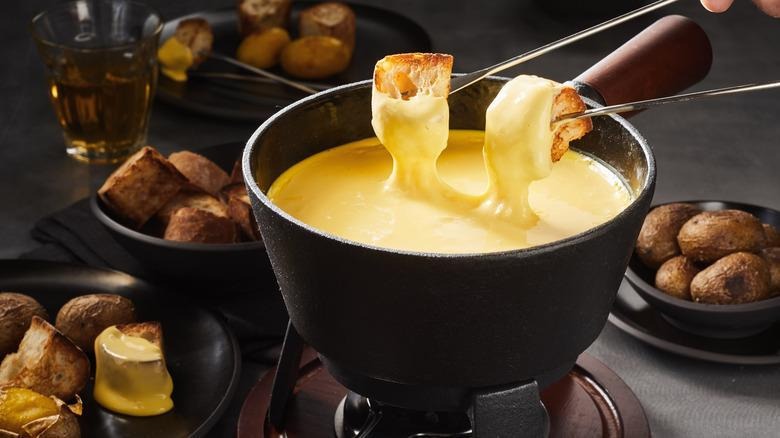
Fondue Cheese

Making cheese fondue at home is easier than many people expect.

The key is preparing the ingredients beforehand and melting the cheese slowly.

Ingredients for Four People

  • 350 g Gruyรจre, grated
  • 350 g Emmentaler, grated
  • 300 mL dry white wine, approximately
  • 1 garlic clove
  • 2 teaspoons cornflour
  • 50ml of Kirsch (cherry schnapps) or 50ml white wine
  • Freshly ground pepper
  • Crusty bread, cut into bite-sized pieces

Step 1: Prepare the Cheese

Grate the cheese before you begin cooking.

Smaller pieces melt more evenly than large chunks and are easier to incorporate into the liquid.

Toss the grated cheese with the cornflour to help maintain a smooth mixture.

Step 2: Prepare the Fondue Pot

Cut the garlic clove in half and rub the inside of your fondue pot or heavy-based saucepan.

This introduces a subtle garlic flavour without overpowering the cheese.

Step 3: Add the grated Cheese and the Wine

Add the wine and the grated cheese into the caquelon

Heat everything slowly until the cheese is fully melted. The wine and fat will have split from the solid cheese, which is what you want. Continue stirring until the mixture becomes smooth and creamy.

Step 4: Add the cornflour

Mix the cornflour with the kirsch brandy to get a liquid. You can also use wine if you donโ€™t have Kirsch. Add the mix to the caquelon and increase the temperature a little bit but make sure it is not boiling. The solid and liquid parts should now come together. If it doesnโ€™t add a bit more of the mixture and/or increase the temperature a little bit.

Season pepper to taste.

Step 5: Serve Immediately

Transfer the fondue to a suitable serving burner or keep it warm in a fondue pot.

Serve with bread, vegetables and your preferred accompaniments.

Maintain gentle heat throughout the meal, avoiding prolonged boiling.

What Should You Dip Into Cheese Fondue?

Traditional cheese fondue is commonly served with crusty, non-sourdough bread, but there are plenty of other delicious options.

Crusty Bread

Bread is the classic fondue accompaniment.

A slightly firm baguette or Pane di Casa works particularly well because it holds its shape when dipped into melted cheese.

Cut or break bread into bite-sized pieces with enough crust to help secure it on the fondue fork.

Boiled Potatoes

Small boiled potatoes are a satisfying alternative to bread.

Their mild flavour complements rich cheese and makes fondue feel more substantial.

Steamed Vegetables

Lightly steamed vegetables can provide freshness and variety.

Popular options include broccoli, cauliflower and carrots.

Cook vegetables until tender but still firm enough to dip.

Mushrooms

Cooked mushrooms offer an earthy flavour that complements Gruyรจre and other Alpine-style cheeses.

Apples and Pears

For something different, try dipping firm apple or pear slices into fondue.

Their natural sweetness can create an interesting contrast to the savoury cheese.

Common Fondue Mistakes and How to Avoid Them

Even a simple fondue can go wrong if the ingredients aren’t handled carefully.

Heating the Cheese Too Quickly

High heat can cause cheese proteins and fats to separate, producing an oily or grainy mixture.

Use gentle heat and stir regularly.

Choosing the Wrong Cheese

Some cheeses don’t melt smoothly or produce the desired consistency.

Traditional Alpine-style melting cheeses are a reliable starting point.

Adding Too Much Liquid

Excess liquid can make fondue thin and difficult to coat onto bread.

Start with a moderate amount and adjust gradually.

Not Grating the Cheese

Large pieces can melt unevenly.

Grating the cheese beforehand helps create a more consistent result.

Letting the Fondue Cool Too Much

Fondue thickens as it cools.

Use a suitable fondue burner to maintain gentle warmth while guests are eating.

Can You Make Cheese Fondue Without Wine?

Yes, it’s possible to prepare a wine-free cheese fondue, although the flavour and texture may differ from traditional recipes.

You can experiment with suitable non-alcoholic liquids such as stock or unsweetened apple juice, combined with a little lemon juice for acidity.

Acidity helps support a smoother cheese mixture, so replacing wine with plain water alone may not produce the same result.

Start with a small amount of liquid and adjust as the cheese melts.

If you’re preparing fondue for guests who avoid alcohol, a wine-free recipe is preferable to assuming that all alcohol disappears during cooking.

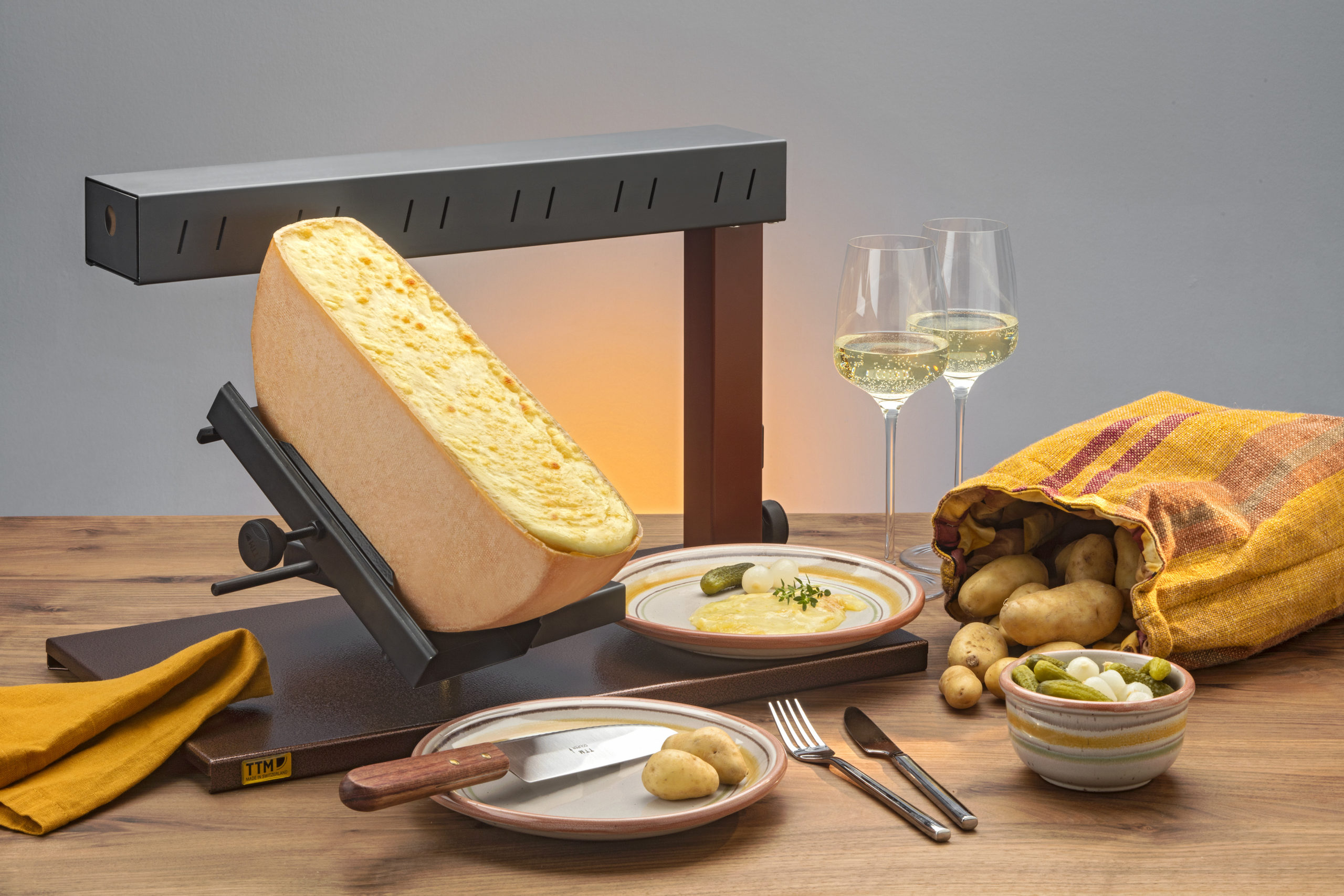
Cheese Fondue vs Raclette: What’s the Difference?
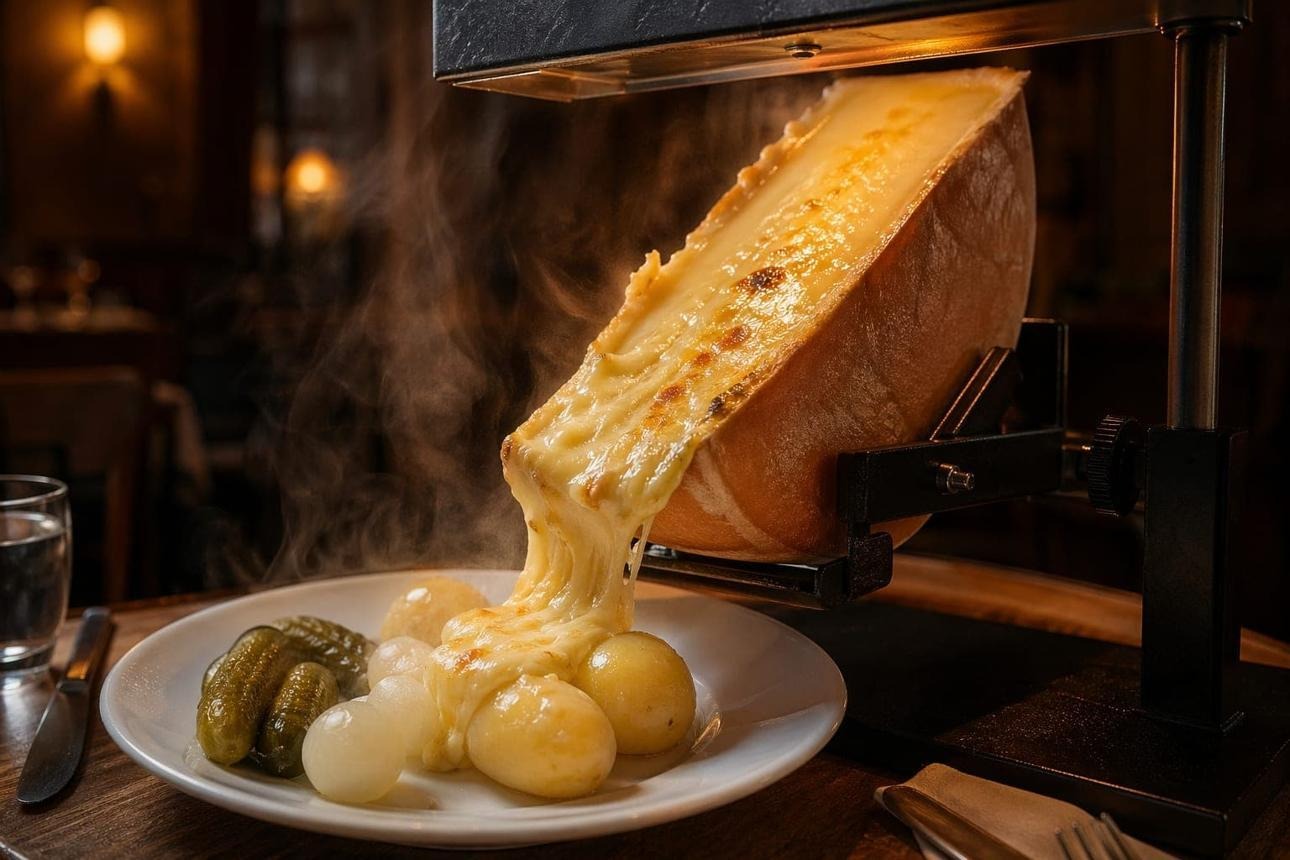
Fondue Cheese

Fondue and Raclette are both traditional Alpine cheese dishes, but they offer different dining experiences.

With fondue, cheese is melted into a smooth mixture and served in a communal pot for dipping.

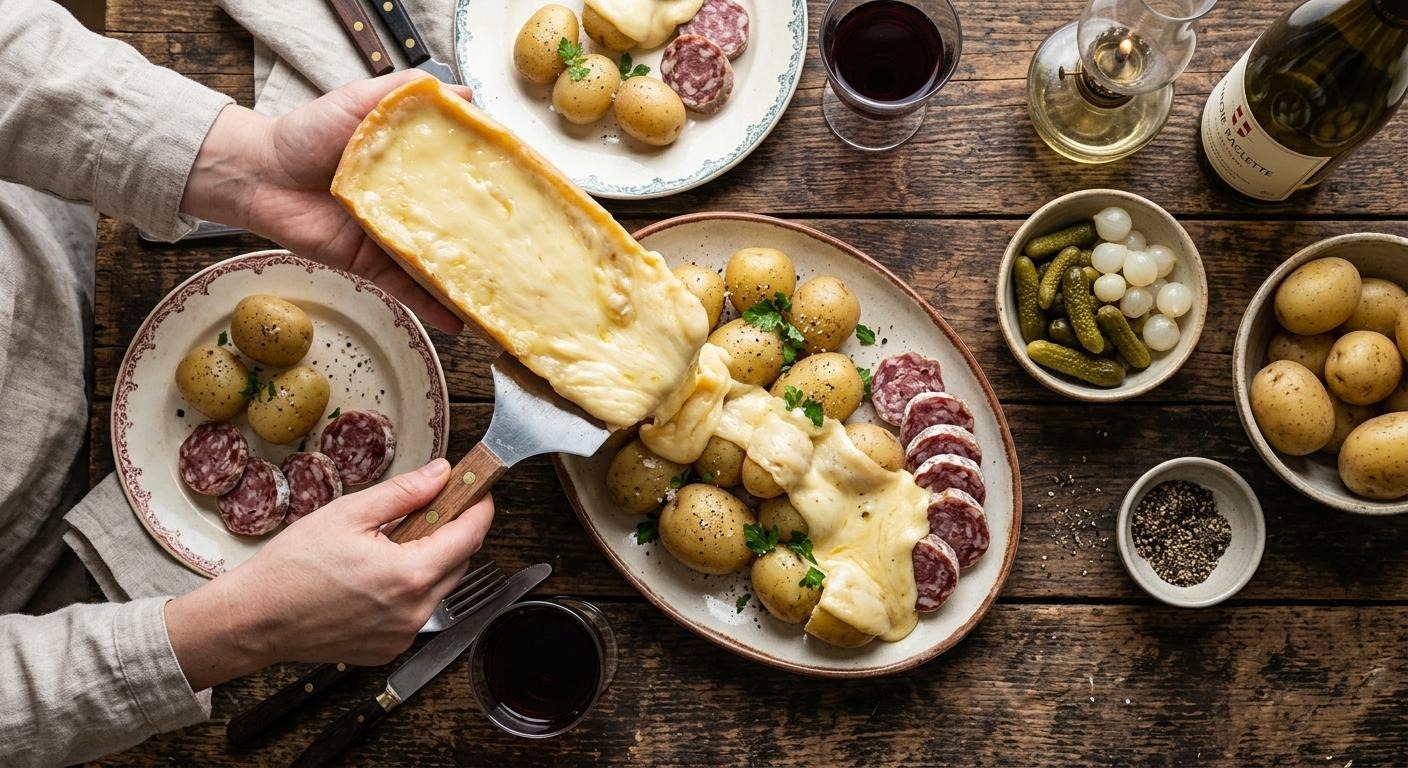
Raclette involves melting cheese and serving it over ingredients such as potatoes, vegetables and pickles.

Both are excellent options for relaxed entertaining.

Fondue is ideal when you want a shared centrepiece, while Raclette offers guests the opportunity to create individual combinations.

If you’re planning a cheese-themed dinner party, either option can provide a memorable alternative to a conventional meal.

How to Host a Cheese Fondue Night

A fondue night doesn’t require an elaborate menu.

Start by choosing a suitable fondue pot and preparing the cheese mixture shortly before guests are ready to eat.

Arrange bread, potatoes and vegetables in separate serving bowls around the table.

Make sure everyone has enough space to reach the pot comfortably.

You can also serve a simple salad or light appetiser to balance the richness of the cheese.

For a larger gathering, consider preparing more than one fondue pot so guests aren’t crowded around a single serving area.

Keep the atmosphere relaxed and allow everyone to enjoy the meal at their own pace.

For more inspiration on planning cheese-based gatherings, read our ultimate guide to entertaining with cheese.

Create the Perfect Fondue Night With Alpine Express

The secret to a memorable cheese fondue is choosing the right combination of cheeses and preparing them with care.

Whether you prefer the traditional pairing of Gruyรจre and Emmentaler or want to experiment with different Alpine varieties, quality cheese provides the foundation for a delicious meal.

Contact Alpine Express to explore our cheese selection to discover options for fondue, cheese platters and entertainment.

Bring the flavours of the Alps to your table and make your next fondue night one to remember.
Posted on

The Best Cheeses for Summer Entertaining, Parties & Gatherings

Best Cheeses for Summer Entertaining, Parties & Gatherings

Summer is the perfect time to bring friends and family together over delicious food, refreshing drinks and relaxed gatherings. Whether you’re hosting a backyard barbecue, planning a picnic or organising a special celebration, a thoughtfully selected cheese platter is an easy way to create something everyone can enjoy.

The best cheeses for summer entertaining are those that complement fresh seasonal produce, suit the style of your gathering and are easy to serve.

From creamy Brie and mild Emmentaler to flavourful Gruyรจre and refreshing fresh cheeses, there are plenty of options for creating a delicious summer spread.

In this guide, we’ll explore which cheeses work best for warm-weather gatherings, how to pair them with seasonal ingredients and practical ways to serve cheese safely during summer.

What Makes a Cheese Ideal for Summer Entertaining?

When choosing cheese for summer, it’s worth considering more than flavour alone.

Warm weather, outdoor dining and the type of event can all influence which varieties are most practical.

For a relaxed afternoon gathering, mild and creamy cheeses may be ideal. For a larger barbecue, firmer varieties that are easy to portion and serve can be more convenient.

Some important factors include:

  • Flavour: Mild, fresh and nutty cheeses complement many summer foods.
  • Texture: A combination of soft and firm cheeses provides variety.
  • Serving style: Choose varieties that are easy to cut, share and enjoy.
  • Accompaniments: Fresh fruit, vegetables and light crackers work particularly well.
  • Temperature: Plan how you’ll keep cheese chilled until serving.

A balanced selection of three to five varieties is usually enough for most gatherings.

1. Brie: A Creamy Favourite for Summer Cheese Platters

Brie is a popular choice for entertaining because of its creamy texture and approachable flavour.

It works beautifully with fresh fruit and simple accompaniments, making it an excellent addition to a summer cheese board.

What to Pair With Brie

Try serving Brie alongside:

  • Fresh strawberries and grapes
  • Sliced pears or apples
  • Plain crackers or baguette
  • A small amount of honey
  • Fig or fruit preserves

These combinations provide sweetness and freshness without overwhelming the cheese.

Best Occasions for Serving Brie

Brie is particularly suitable for dinner parties, celebrations and relaxed afternoon gatherings.

It can be served as part of a larger platter or presented as a feature cheese with a few carefully chosen accompaniments.

For outdoor entertaining, keep Brie refrigerated until shortly before serving and avoid leaving it in direct sunlight.

2. Emmentaler: A Mild, Nutty Cheese for Sharing

Emmentaler is a traditional Swiss-style cheese known for its distinctive holes and mild, nutty flavour.

Its relatively firm texture makes it easy to slice, portion and arrange on a platter.

Because it isn’t overly strong, Emmentaler can be an excellent option when entertaining guests with different preferences.

What to Pair With Emmentaler

Emmentaler works particularly well with:

  • Fresh apples and pears
  • Grapes
  • Crusty bread
  • Almonds and walnuts
  • Mild cured meats

Its nutty character complements both sweet and savoury ingredients.

Best Occasions for Serving Emmentaler

Emmentaler is a versatile option for picnics, grazing platters, family celebrations and casual lunches.

It can also be used in sandwiches and savoury dishes, making it useful when you’re preparing several different foods for the same event.

3. Gruyรจre: A Rich and Flavourful Choice

Gruyรจre is another traditional Swiss cheese that deserves a place on a summer entertaining menu.

Known for its rich, savoury and slightly nutty flavour, Gruyรจre offers a more distinctive experience than many milder varieties.

It can be enjoyed in small slices, wedges or cubes, making it easy to incorporate into a cheese platter.

What to Pair With Gruyรจre

Consider pairing Gruyรจre with:

  • Fresh pears
  • Crusty sourdough
  • Walnuts
  • Grapes
  • Lightly flavoured crackers

The sweetness of fruit can provide a pleasing contrast to Gruyรจre’s savoury character.

Best Occasions for Serving Gruyรจre

Gruyรจre works well for dinner parties and special occasions where you want to introduce guests to a more distinctive cheese.

It’s also a useful addition to savoury tarts, toasted sandwiches and other dishes served at summer gatherings.

For a cheese platter, pair Gruyรจre with a soft variety such as Brie to create contrast.

4. Camembert: A Soft Cheese for Relaxed Gatherings

Camembert is another excellent option for hosts who enjoy creamy cheeses.

Although similar to Brie in some respects, Camembert can offer a more earthy flavour depending on its style and maturity.

Its soft texture makes it enjoyable with bread, crackers and fresh fruit.

What to Pair With Camembert

Some simple combinations include:

  • Fresh baguette
  • Grapes and apples
  • Honey
  • Walnuts
  • Fruit chutney

Camembert can also be served warm when the product is suitable for baking, creating an inviting shared dish.

Best Occasions for Serving Camembert

Camembert is ideal for smaller gatherings, dinner parties and relaxed evenings with friends.

If you’re already serving Brie, consider whether another soft cheese is necessary. Including one creamy variety alongside firmer options may create a more balanced platter.

5. Aged Cheddar: A Familiar Favourite With Plenty of Flavour

Aged Cheddar is a reliable choice for summer entertaining because it’s familiar, versatile and easy to serve.

Its firmer texture makes it suitable for slicing, cubing or presenting as a wedge.

Depending on its maturity, Cheddar can range from relatively mild to rich and sharp.

What to Pair With Aged Cheddar

Aged Cheddar complements:

  • Crisp apples
  • Pears
  • Fruit chutneys
  • Plain crackers
  • Crusty bread
  • Pickles

Its savoury flavour works particularly well alongside sweet and tangy accompaniments.

Best Occasions for Serving Cheddar

Cheddar is a practical option for birthday celebrations, barbecues, picnics and family gatherings.

It can also be incorporated into sandwiches, salads and savoury snacks, making it a versatile ingredient for summer menus.

6. Fresh Cheeses for Lighter Summer Dishes

Fresh cheeses such as Mozzarella, Ricotta and Feta can be excellent additions to summer entertaining menus.

Unlike aged cheeses, these varieties often have lighter, fresher flavours that complement vegetables, herbs and seasonal produce.

They’re particularly useful when serving cheese as part of a meal rather than a traditional grazing board.

Fresh Mozzarella

Mozzarella pairs beautifully with tomatoes, basil and olive oil.

A simple tomato and Mozzarella salad can be an easy addition to a barbecue or outdoor lunch.

Ricotta

Ricotta has a mild flavour and soft texture.

It can be spread on toasted bread and paired with herbs, roasted vegetables or fresh fruit.

Feta

Feta offers a salty, tangy flavour that works well with salads and vegetables.

Try combining it with cucumber, tomatoes, watermelon or fresh herbs.

Fresh cheeses generally require careful refrigeration, so prepare and serve these dishes close to eating time.

How to Build the Perfect Summer Cheese Platter

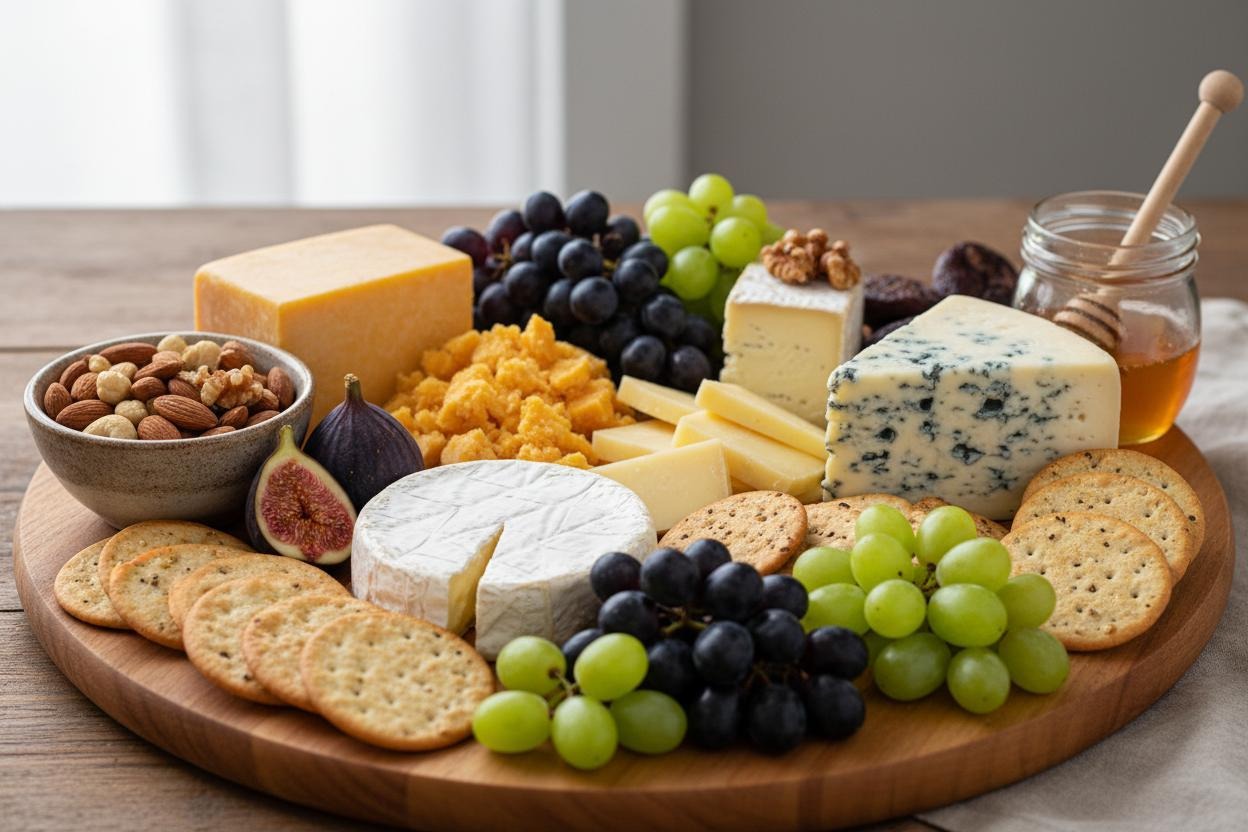
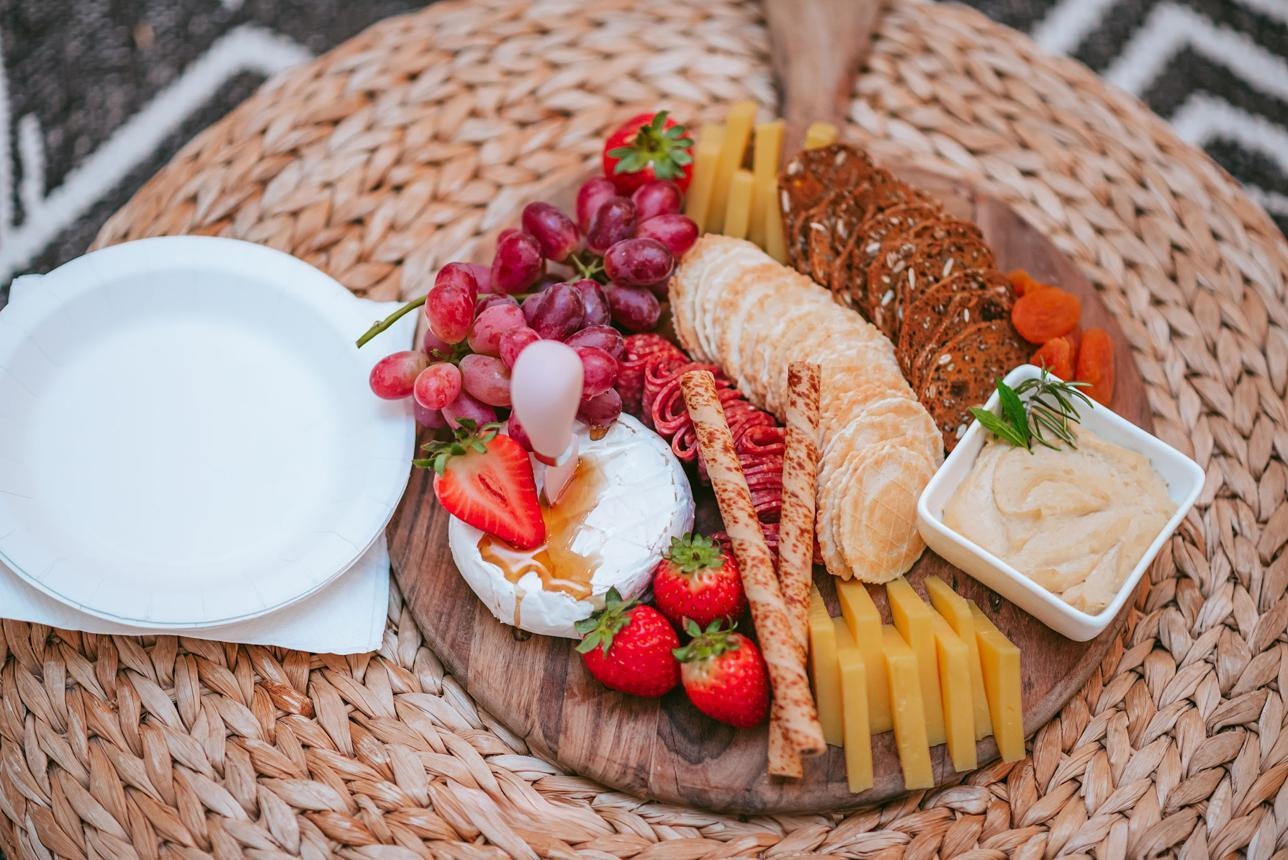
Cheese Platter

A summer cheese platter should feel fresh, colourful and easy to enjoy.

Rather than focusing entirely on rich cheeses and heavy accompaniments, incorporate seasonal produce and lighter flavours.

Start With Three or Four Cheeses

Choose varieties with different textures and flavours.

For example:

  • Brie for creaminess
  • Emmentaler for a mild, nutty flavour
  • Gruyรจre for a richer, savoury option
  • Aged Cheddar for familiarity

This combination provides enough variety without overwhelming guests.

Add Fresh Seasonal Fruit

Grapes, berries, apples, pears and other seasonal fruits introduce colour and sweetness.

Choose fruit that’s easy to serve and doesn’t require complicated preparation.

Include Light Accompaniments

Plain crackers, baguette and fresh vegetables work particularly well.

A small bowl of nuts or preserves can add interest without making the platter too heavy.

Keep the Presentation Simple

Use a large serving board and arrange the cheeses first.

Add fruit and crackers around them, then fill any gaps with smaller accompaniments.

A natural, relaxed presentation often suits summer entertaining better than an overly elaborate arrangement.

For a step-by-step approach, read our guide to creating the perfect cheese platter.

Cheese Pairings for Summer Drinks

Refreshing drinks can complement a summer cheese platter and help balance richer flavours.

White Wine

Crisp white wines can work well with creamy and mild cheeses.

Sauvignon Blanc, dry Riesling and lighter styles of Chardonnay are worth considering.

Rosรฉ

A dry Rosรฉ can be a versatile option for summer gatherings.

Its refreshing character can complement mild cheeses, fresh fruit and light grazing foods.

Sparkling Wine

Sparkling wine pairs particularly well with creamy cheeses because its acidity provides contrast.

It’s also a popular choice for celebrations and special occasions.

Non-Alcoholic Options

Sparkling water with lemon, lightly flavoured soda and alcohol-free sparkling beverages are refreshing alternatives.

When selecting drinks, consider offering a mixture of options to suit your guests’ preferences.

Summer Cheese Entertaining Ideas for Different Occasions

Choosing the right serving style can make entertaining easier.

Backyard Barbecues

For a barbecue, a cheese platter works well as a starter while guests wait for the main meal.

Choose familiar varieties such as Brie, Emmentaler and Cheddar, with crackers, fruit and bread.

Keep portions manageable so guests can graze without filling up before the barbecue.

Picnics

Picnics require a little extra planning because refrigeration may not be readily available.

Firmer cheeses can be easier to portion and transport, but they still need appropriate temperature control.

Pack cheese in a cooler with ice bricks and keep it chilled until serving.

Poolside Gatherings

For poolside entertaining, choose easy-to-eat portions and avoid leaving cheese in direct sunlight.

Small platters that can be replenished are often more practical than one large board.

Dinner Parties

For summer dinner parties, a carefully selected cheese course can provide a relaxed way to finish the meal.

Serve three or four varieties with fresh fruit, nuts and simple crackers.

You can also introduce guests to traditional Alpine cheeses for something a little different.

How to Keep Cheese Fresh During Summer Entertaining

Food safety is especially important when serving cheese during warm weather.

Cheese can deteriorate more quickly when exposed to heat, and perishable varieties shouldn’t be left unrefrigerated for extended periods.

To keep your platter fresh:

  • Refrigerate cheese until close to serving time.
  • Keep serving boards away from direct sunlight.
  • Use smaller platters and replenish them as required.
  • Keep spare cheese chilled in the refrigerator or an insulated cooler.
  • Follow food safety guidance for food held between 5ยฐC and 60ยฐC.

Under Australia’s two-hour/four-hour rule, potentially hazardous food held in this temperature range for less than two hours may be refrigerated again, food held for two to four hours should be eaten immediately rather than returned to refrigeration, and food held for four hours or more should be discarded. The time is cumulative.

Also consider providing separate utensils and keeping the serving area clean.

These simple steps help ensure your guests can enjoy the food comfortably and safely.

Choosing Cheese for Different Summer Guests

Every gathering brings together people with different tastes and dietary preferences.

A successful summer cheese selection should reflect that variety.

If you’re entertaining families, include mild cheeses that are familiar and easy to enjoy.

For guests who appreciate stronger flavours, consider adding a mature cheese or a small blue cheese.

If you’re catering for vegetarian guests, check the product’s ingredients and rennet information, as not all cheeses are made with vegetarian-friendly coagulants.

For guests with allergies or other dietary requirements, always check individual labels and avoid cross-contact.

The best approach is to offer a thoughtful range rather than trying to provide every possible variety.

Make Summer Entertaining Easy With Alpine Express

Summer entertaining is about enjoying good food, great company and relaxed moments together.

With the right combination of creamy, nutty and savoury cheeses, you can create a spread that suits everything from casual barbecues to special celebrations.

For more ideas on building platters, matching flavours and planning memorable gatherings, explore our ultimate guide to entertaining with cheese.

Discover the Alpine Express cheese selection or contact us to find delicious options for your next summer gathering.

Bring something special to the table with quality cheese from Alpine Express.

Posted on

How to Create the Perfect Cheese Platter for Entertaining

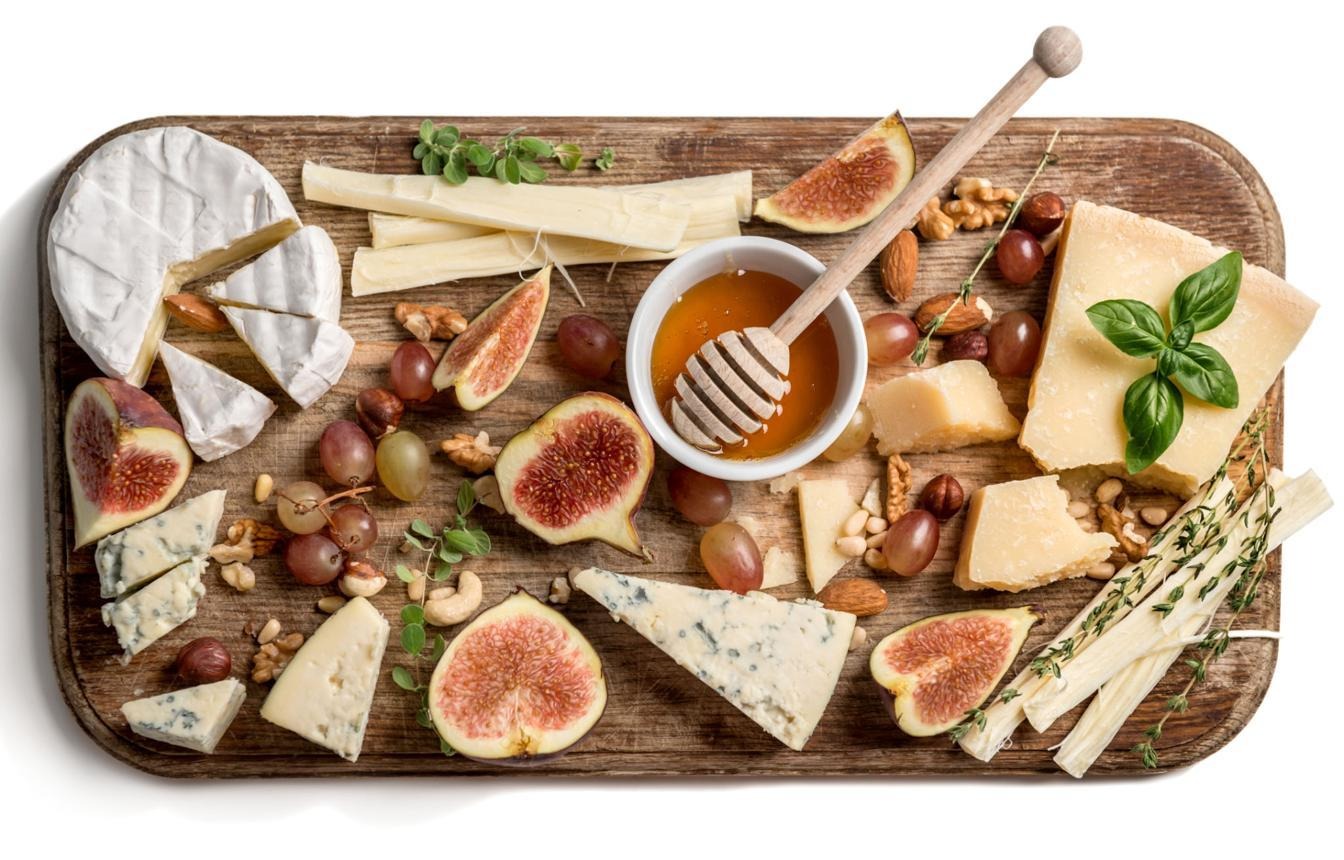
Cheese Platter

A well-presented cheese platter is one of the easiest ways to impress guests without spending hours preparing food. Whether you’re hosting a dinner party, celebrating a special occasion or enjoying a casual afternoon with friends, a thoughtfully arranged cheese board can bring everyone together.

The secret to creating the perfect cheese platter isn’t about choosing the most expensive ingredients or filling every available space. It’s about combining complementary flavours, textures and accompaniments in a way that looks appealing and tastes delicious.

From selecting the right varieties to arranging your board and calculating quantities, this guide will help you create a cheese platter that’s easy to prepare and enjoyable to share.

What Makes a Great Cheese Platter?

A great cheese platter offers variety without becoming overwhelming.

Rather than selecting several cheeses with similar characteristics, choose a combination that introduces different textures and flavour profiles.

A balanced platter generally includes a mixture of:

  • Soft, creamy cheeses for a mild and approachable option
  • Semi-hard cheeses with nutty or savoury flavours
  • Aged cheeses with firmer textures and richer flavours
  • A stronger variety for guests who enjoy something more distinctive

This combination gives guests the opportunity to try different cheeses and discover their favourite pairings.

Presentation also matters. A platter should look inviting while remaining practical, with enough space for guests to cut, spread and serve each cheese comfortably.

Step 1: Choose Three to Five Different Cheeses

The first step is selecting your cheese varieties.

For most gatherings, three to five options provide plenty of choice without making preparation complicated.

Brie or Camembert for Creaminess

Brie and Camembert are popular additions to cheese platters because of their smooth textures and gentle flavours.

They pair well with plain crackers, crusty bread, grapes and fruit preserves.

Including one of these varieties creates an approachable option that most guests will recognise.

Gruyรจre or Emmentaler for Nutty Flavours

Alpine-style cheeses can bring something different to your platter.

Gruyรจre offers a rich, savoury flavour, while Emmentaler is generally milder with a distinctive nutty character.

Both can be enjoyed in small slices or wedges and complement bread, nuts and fresh fruit.

These varieties are particularly useful when you want to introduce traditional European cheese flavours.

Aged Cheddar for Familiarity

A quality aged Cheddar adds a firmer texture and more pronounced savoury flavour.

It’s a versatile choice that pairs with apples, pears, chutneys and crackers.

Cheddar can also provide a familiar option for guests who prefer traditional cheese varieties.

Blue Cheese for Something Bold

If your guests enjoy stronger flavours, consider including a blue cheese.

A small wedge can add complexity and contrast to the platter.

Pair it with honey, figs or pears to balance its saltiness and intensity.

For gatherings with mixed preferences, position stronger cheeses separately from milder varieties.

Step 2: Calculate How Much Cheese You Need

One of the most common questions when preparing a cheese platter is how much to buy.

The answer depends on whether the platter is being served as a starter, part of a larger spread or the main food offering.

Number of guestsCheese for light grazing
4 people240โ€“400 g
6 people360โ€“600 g
8 people480โ€“800 g
10 people600 gโ€“1 kg
15 people900 gโ€“1.5 kg

These quantities assume approximately 60โ€“100 grams per person.

If you’re serving cheese as the main feature of a gathering, allow more.

It’s also worth considering the other food available. A platter served alongside substantial meals and appetisers may require less cheese than one intended as the centrepiece.

Step 3: Select the Best Accompaniments

The accompaniments you choose can make a simple platter feel more complete.

However, they should complement the cheese rather than compete with it.

Fresh Fruit

Fresh fruit introduces colour, sweetness and a refreshing contrast to rich cheeses.

Grapes are particularly popular because they’re easy to serve and pair with many varieties.

Other excellent choices include sliced apples, pears, strawberries and figs.

Choose fruit that is fresh, ripe and easy for guests to eat.

Crackers and Bread

Plain crackers provide a neutral base that allows the flavour of each cheese to stand out.

Offer a mixture of crackers and fresh bread to create variety.

A crusty baguette or sourdough is particularly enjoyable with soft cheeses, while crisp crackers work well with firmer varieties.

Avoid relying entirely on strongly flavoured crackers, as these can overpower more delicate cheeses.

Nuts and Dried Fruit

Walnuts, almonds and dried apricots add texture and natural sweetness.

They work especially well with aged and nutty cheeses.

A small handful scattered around the board is usually sufficient.

Honey and Preserves

Honey, fig jam and fruit chutneys can provide an enjoyable contrast to salty or savoury cheeses.

Serve these in small bowls or dishes to keep the platter neat.

Avoid adding too many different preserves, as a couple of well-chosen options are usually enough.

Step 4: Choose the Right Serving Board

Your serving board plays an important role in both presentation and practicality.

Wooden boards are popular because they provide a natural, rustic appearance.

Ceramic platters and marble serving boards can also create an elegant presentation.

When choosing a board, consider the number of guests and the amount of food being served.

A board that’s too small can appear overcrowded and make it difficult to access individual cheeses.

For larger gatherings, two smaller platters may be more practical than one oversized board.

You can also create separate boards for mild cheeses, stronger varieties and savoury accompaniments.

Step 5: Arrange Your Cheese Platter Like a Professional

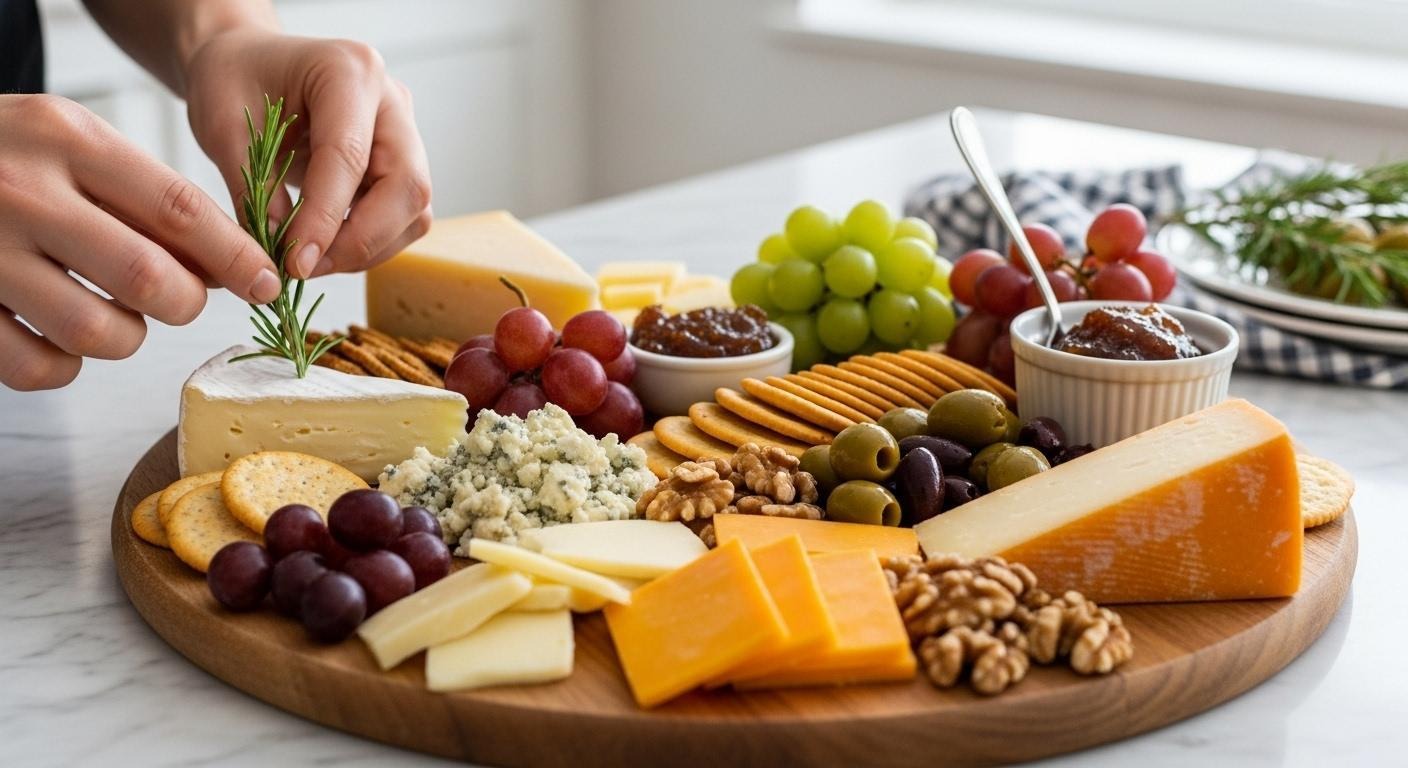
How to Create a Cheese Platter

Arranging your cheese platter doesn’t require professional styling skills.

A simple approach is to start with the largest items and gradually fill the remaining spaces.

Start With the Cheese

Place your selected cheeses around the board, leaving enough room between each variety.

Try positioning a round soft cheese towards one side and using wedges of hard cheese to create visual balance.

Cut a few slices from harder varieties to make serving easier, but leave some pieces intact to maintain an attractive presentation.

Add Small Bowls

Next, position small bowls containing olives, honey or preserves.

These help create structure and prevent wet ingredients from spreading across the board.

Arrange Crackers and Bread

Add crackers and bread in small groups rather than placing everything in one location.

This allows guests to reach accompaniments easily from different sides of the board.

Fill the Gaps With Fruit and Nuts

Use grapes, sliced fruit and nuts to fill the remaining spaces.

The natural colours and shapes of these ingredients help create a balanced appearance.

Remember that the board doesn’t need to be completely covered. A little space makes the presentation easier to navigate.

Step 6: Prepare Your Cheese for Serving

Cheese preparation can influence both flavour and texture.

Many cheeses are more enjoyable when they aren’t served directly from a very cold refrigerator.

For suitable varieties, a short period at room temperature before serving can help their flavour become more noticeable.

However, avoid leaving perishable cheese unrefrigerated for extended periods, particularly during warm weather.

Keep cheese chilled until close to serving time, and return leftovers to the refrigerator promptly in accordance with food safety guidance.

You should also provide appropriate serving utensils.

A separate knife for blue cheese or strongly flavoured varieties helps prevent flavours from transferring to milder cheeses.

Cheese Platter Ideas for Different Occasions

Not every gathering requires the same selection.

Tailoring your platter to the occasion can make the experience more enjoyable.

Cheese Platter for a Dinner Party

For a dinner party, choose three or four carefully selected cheeses.

A combination of Brie, Gruyรจre, aged Cheddar and a small blue cheese creates variety without becoming overwhelming.

Serve with crusty bread, pears and a small selection of preserves.

Cheese Platter for a Birthday Celebration

Birthday gatherings often involve guests with different tastes.

Choose approachable varieties and provide generous quantities of crackers, grapes and other familiar accompaniments.

A mixture of mild and stronger cheeses allows everyone to find something they enjoy.

Cheese Platter for Summer Entertaining

For warm-weather gatherings, lighter cheeses and fresh seasonal produce can be particularly appealing.

Consider pairing mild cheeses with berries, grapes, cucumber and fresh bread.

Keep the platter cool and replenish it in smaller portions throughout the event.

For more inspiration, explore our guide to the best cheeses for summer entertaining.

Cheese Platter for a Special Occasion

For anniversaries, celebrations and festive events, consider including a specialty Alpine-style cheese alongside familiar favourites.

Adding artisan bread, fresh figs and quality preserves can make the platter feel more distinctive without significantly increasing preparation time.

Common Cheese Platter Mistakes to Avoid

Creating a beautiful platter is straightforward, but a few common mistakes can affect the result.

Choosing too many similar cheeses: Include different textures and flavours rather than several nearly identical varieties.

Overloading the board: Give each cheese enough space so guests can serve themselves easily.

Using too many accompaniments: Cheese should remain the focus. Select a few complementary ingredients rather than adding everything available.

Forgetting serving utensils: Provide suitable knives and spoons so guests can enjoy the platter comfortably.

Preparing everything too early: Cut fresh fruit close to serving time where practical and keep perishable ingredients refrigerated until needed.

How to Make Your Cheese Platter More Memorable

A memorable platter isn’t necessarily the largest or most elaborate.

Often, it’s the small details that make the biggest difference.

Consider including one cheese your guests may not have tried before, alongside familiar favourites.

You could also create simple pairing suggestions, such as Gruyรจre with pear, Brie with honey or aged Cheddar with apple.

Small labels identifying each variety can encourage guests to explore different flavours.

Most importantly, choose cheeses you enjoy and present them in a way that suits your gathering.

For more ideas on choosing, pairing and serving cheese, read our ultimate guide to entertaining with cheese.

Create Your Next Cheese Platter With Alpine Express

A great cheese platter begins with quality ingredients and a little thoughtful planning.

Whether you’re hosting a dinner party, celebrating a milestone or simply sharing food with friends, the right combination of cheeses can make the occasion feel special.

Contact Alpine Express to explore our cheese selection to find varieties for your next platter.

Choose your favourites and create a cheese board your guests will love.

Posted on

Entertaining With Cheese: The Ultimate Guide to Cheese Platters, Pairings & Hosting

Ultimate Guide to Cheese Platters

Entertaining with cheese is one of the simplest ways to bring people together over good food. Whether you’re planning a relaxed afternoon with friends, a family celebration, a dinner party or a special occasion, a thoughtfully selected cheese platter can become the centrepiece of your gathering.

The beauty of serving cheese is its versatility. From mild and creamy varieties to rich, nutty and full-flavoured favourites, there’s something to suit almost every taste. With the right selection, accompaniments and presentation, you can create an impressive spread without spending hours in the kitchen.

You don’t need to be a cheese expert to put together something memorable. Understanding a few basic principles, such as balancing flavours, choosing complementary pairings and preparing everything ahead of time, makes entertaining easier and more enjoyable.

In this guide, we’ll explore how to choose the right cheeses, build a balanced platter, pair cheese with food and drinks, and create an inviting experience for your guests.

Why Cheese Is Perfect for Entertaining

One of the biggest advantages of serving cheese is that it works across almost every style of gathering.

For casual entertaining, a simple board with a few carefully chosen varieties, crackers and fresh fruit can be more than enough. For formal occasions, you can create a larger grazing spread featuring specialty cheeses, artisan breads, nuts, preserves and other accompaniments.

Cheese is also an excellent option for hosts who prefer to prepare food in advance. Rather than spending the entire evening cooking, you can arrange most of your platter beforehand and focus on enjoying the occasion.

Other reasons cheese works so well for entertaining include:

  • Variety: Different textures, flavours and styles make it easy to accommodate a range of preferences.
  • Flexibility: A cheese platter can be an appetiser, a shared snack or a course in its own right.
  • Presentation: A beautifully arranged board creates an inviting centrepiece.
  • Easy preparation: Most components require little or no cooking.
  • Customisation: Cheese can be paired with seasonal produce, bread, crackers, preserves and beverages.

The key is choosing varieties that complement one another rather than simply adding as many different cheeses as possible.

Choosing the Right Cheese for Your Gathering

A successful cheese platter starts with variety. Instead of choosing several cheeses with similar flavours and textures, aim for a balanced selection that offers guests different experiences.

Soft and Creamy Cheeses

Soft cheeses are often the first to disappear from a platter because they’re approachable and easy to enjoy.

Brie and Camembert are popular choices thanks to their creamy textures and gentle, buttery flavours. They pair beautifully with fresh bread, crackers, grapes and fruit preserves.

Soft cheeses are particularly useful when entertaining a mixed group, as they provide a familiar starting point for guests who may not enjoy stronger varieties.

Hard and Aged Cheeses

Hard cheeses introduce a firmer texture and often deliver richer, more concentrated flavours.

Aged Cheddar, Gruyรจre and Parmesan-style cheeses can bring savoury, nutty and slightly sweet notes to a platter.

These varieties are excellent alongside crusty bread, nuts, pears and savoury accompaniments.

They also provide an appealing contrast to softer cheeses, making the overall selection more interesting.

Semi-Hard Alpine Cheeses

Alpine-style cheeses are especially versatile for entertaining.

Varieties such as Emmentaler, Gruyรจre and Raclette offer distinctive flavours that work well on a platter and in warm dishes.

Emmentaler is known for its mild, nutty character, while Gruyรจre offers a more savoury and complex flavour. Raclette is particularly popular for melting, making it a great choice for interactive meals.

Including an Alpine-style variety can introduce guests to traditional European cheese flavours without overwhelming the platter.

Blue and Stronger-Flavoured Cheeses

For guests who enjoy bolder flavours, a blue cheese can add another dimension.

Blue cheeses range from relatively creamy and mild to sharp and intense. A small portion is often sufficient, particularly when served alongside honey, pears, figs or sweet preserves.

When choosing a stronger variety, consider your guests’ preferences and balance it with milder options.

How Many Cheeses Should You Serve?

There’s no need to overwhelm guests with an enormous selection.

For most smaller gatherings, three to five cheeses provide enough variety without making the platter complicated.

Gathering sizeSuggested selection
2โ€“4 people3 different cheeses
5โ€“8 people3โ€“5 different cheeses
9โ€“15 people5โ€“6 different cheeses
Large gatherings5โ€“7 cheeses, with larger quantities of popular varieties

These are practical starting points, not strict rules. Adjust for the number of other dishes being served.

As a general guide, allow approximately 60โ€“100 grams of cheese per person when it’s part of a larger spread. If cheese is the main feature of the meal, you may wish to provide around 120โ€“180 grams per person.

A smaller number of well-chosen cheeses is often more enjoyable than a crowded board where flavours become difficult to distinguish.

Building a Balanced Cheese Platter

Presentation can make even a simple selection feel special.

Begin by choosing a board or platter large enough to comfortably hold the cheeses and accompaniments. Wooden boards, ceramic platters and serving trays all work well.

Place the cheeses first, spacing them around the board so each variety has its own area. Larger pieces can act as visual anchors, while smaller wedges and slices help create balance.

Next, add crackers, bread and fresh fruit. Use small bowls for olives, honey or preserves to keep the arrangement tidy.

Finally, fill any remaining spaces with nuts, dried fruit or other accompaniments.

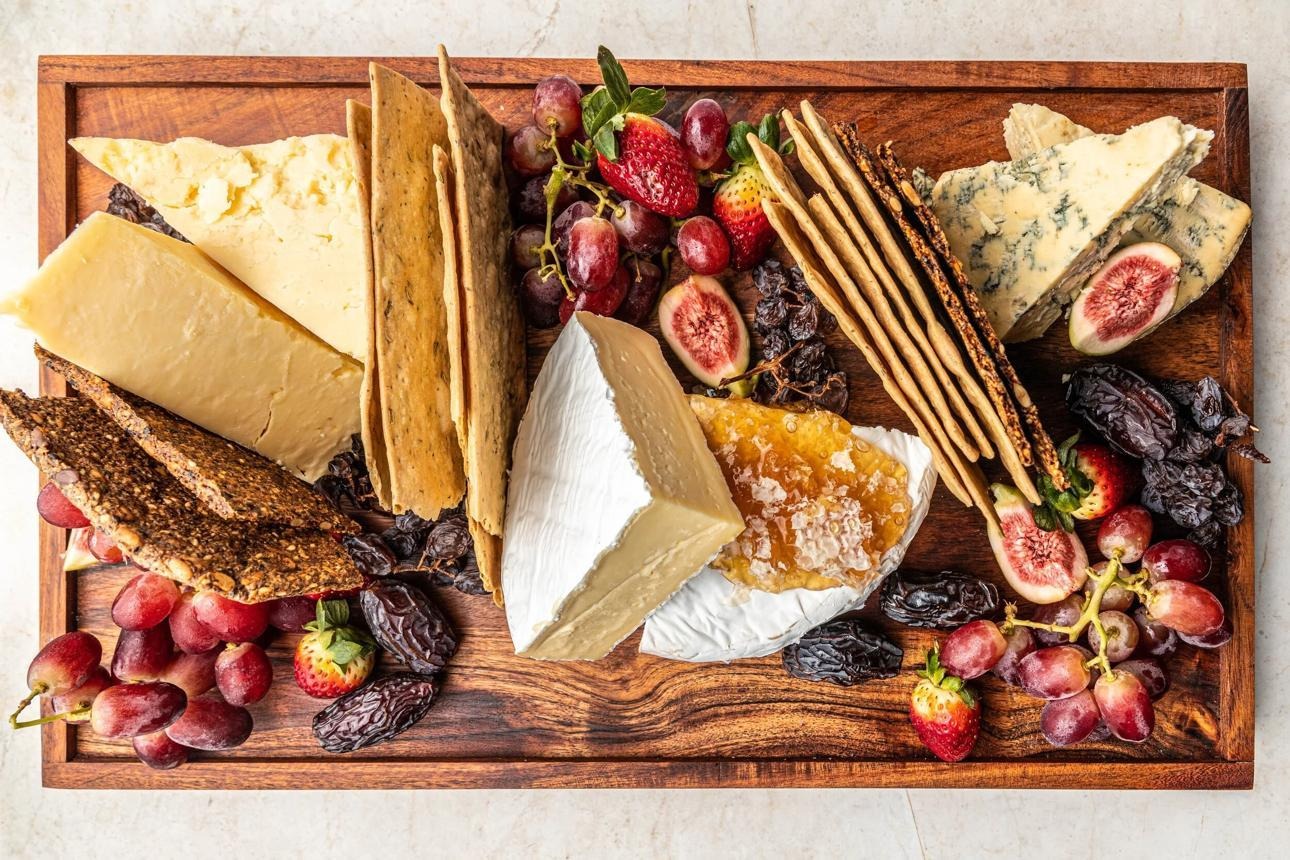
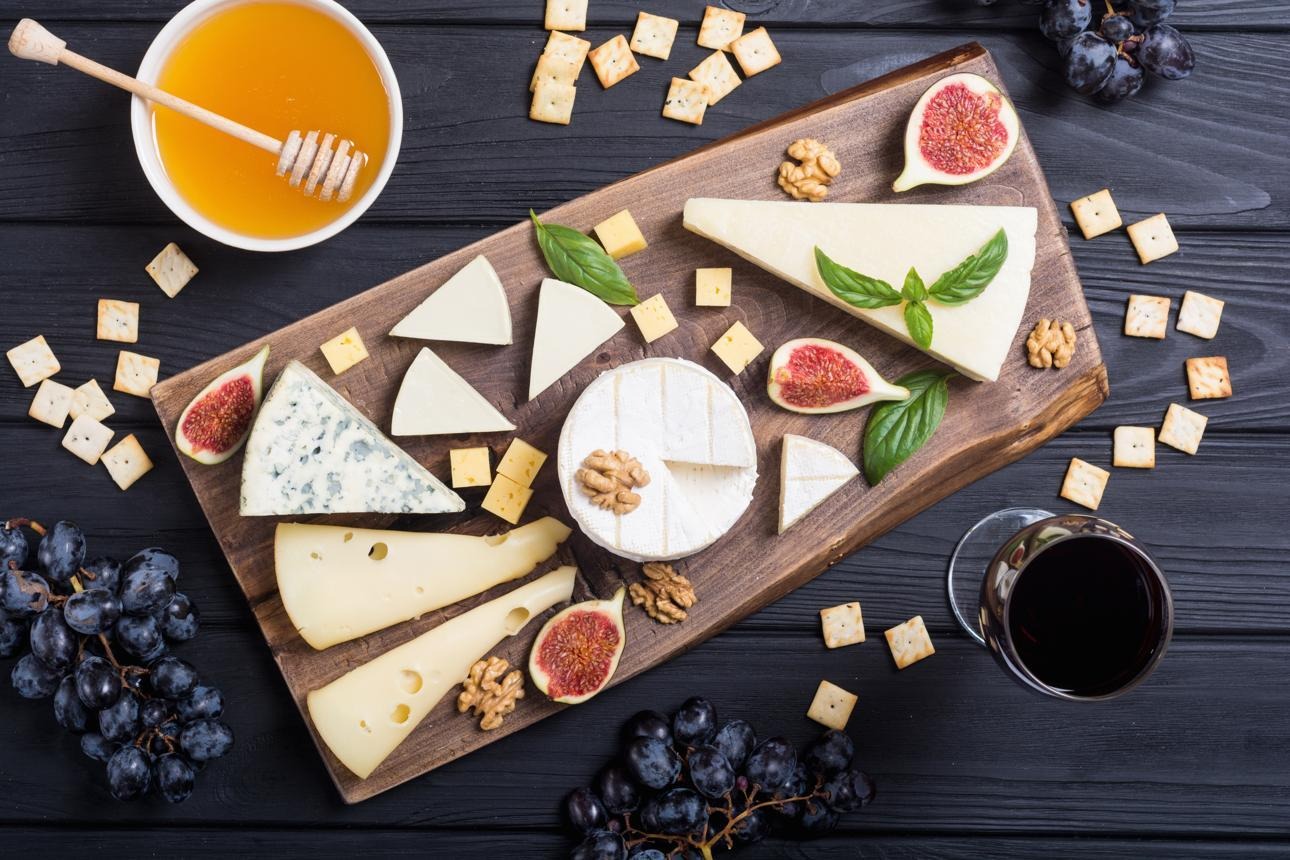
Try to include a mix of shapes, colours and textures. A combination of whole wedges, sliced cheese, bunches of grapes and small bowls creates a more inviting presentation.

For a detailed walkthrough, read our guide to creating the perfect cheese platter once the supporting article has been published and its final URL is available.

The Best Accompaniments for Cheese

While cheese should remain the main attraction, the right accompaniments can enhance the overall experience.

Fresh Fruit

Fresh fruit introduces sweetness and freshness that balance richer cheese flavours.

Popular options include:

  • Grapes with Brie, Camembert and mild hard cheeses
  • Pears with blue cheese and aged varieties
  • Apples with Cheddar and Alpine-style cheeses
  • Figs with creamy and stronger-flavoured cheeses
  • Strawberries with mild, fresh cheeses

Choose seasonal fruit wherever possible for the best flavour and presentation.

Bread and Crackers

Bread and crackers provide a neutral base that allows the flavour of the cheese to stand out.

Plain crackers are a reliable option because they don’t compete with delicate cheeses.

Crusty sourdough, baguettes and artisan breads are also excellent additions, not just for creamy or spreadable varieties.

For a more interesting platter, offer both a simple cracker and a rustic bread.

Nuts, Honey and Preserves

Small accompaniments can create memorable flavour combinations.

Walnuts, almonds and other nuts complement aged and nutty cheeses. Honey provides sweetness alongside blue cheese and salty varieties, while fig or fruit preserves work particularly well with creamy cheeses.

The goal is to enhance the cheese rather than overpower it.

Savoury Accompaniments

For guests who enjoy more savoury flavours, consider olives, pickles, cured meats or roasted vegetables.

These additions can transform a simple cheese board into a substantial grazing platter.

However, it’s worth keeping strong flavours separate so guests can enjoy each cheese individually.

Pairing Cheese With Wine and Other Drinks

Choosing drinks to complement your platter doesn’t need to be complicated.

A useful starting point is to consider the intensity of the cheese. Delicate cheeses generally work best with lighter beverages, while stronger varieties can stand up to richer flavours.

White Wine and Cheese

Crisp white wines can complement creamy cheeses by providing freshness and acidity.

A dry Riesling or Sauvignon Blanc may work well with mild, creamy varieties, while a fuller-bodied Chardonnay can pair with richer cheeses.

Red Wine and Cheese

Lighter red wines are often more versatile with cheese than very heavy, tannic styles.

Pinot Noir can complement earthy soft cheeses and some semi-hard varieties.

For aged hard cheeses, a medium-bodied red may provide a pleasing balance.

Sparkling Wine and Cheese

Sparkling wine is a flexible option for entertaining.

Its acidity and bubbles can provide a refreshing contrast to creamy textures, making it particularly enjoyable with Brie style cheeses but also fuller, richer varieties like Sbrinz or Parmigiano Reggiano.

Non-Alcoholic Pairings

Guests who don’t drink alcohol can still enjoy thoughtful pairings.

Sparkling water with citrus, lightly flavoured sodas, apple juice and alcohol-free sparkling beverages can all complement a cheese platter.

Avoid overly sweet drinks when serving delicate cheeses, as they may overpower the flavour.

Entertaining With Cheese During Summer

Warm-weather entertaining calls for a slightly different approach.

During summer, lighter flavours, fresh produce and easy-to-share food tend to work particularly well.

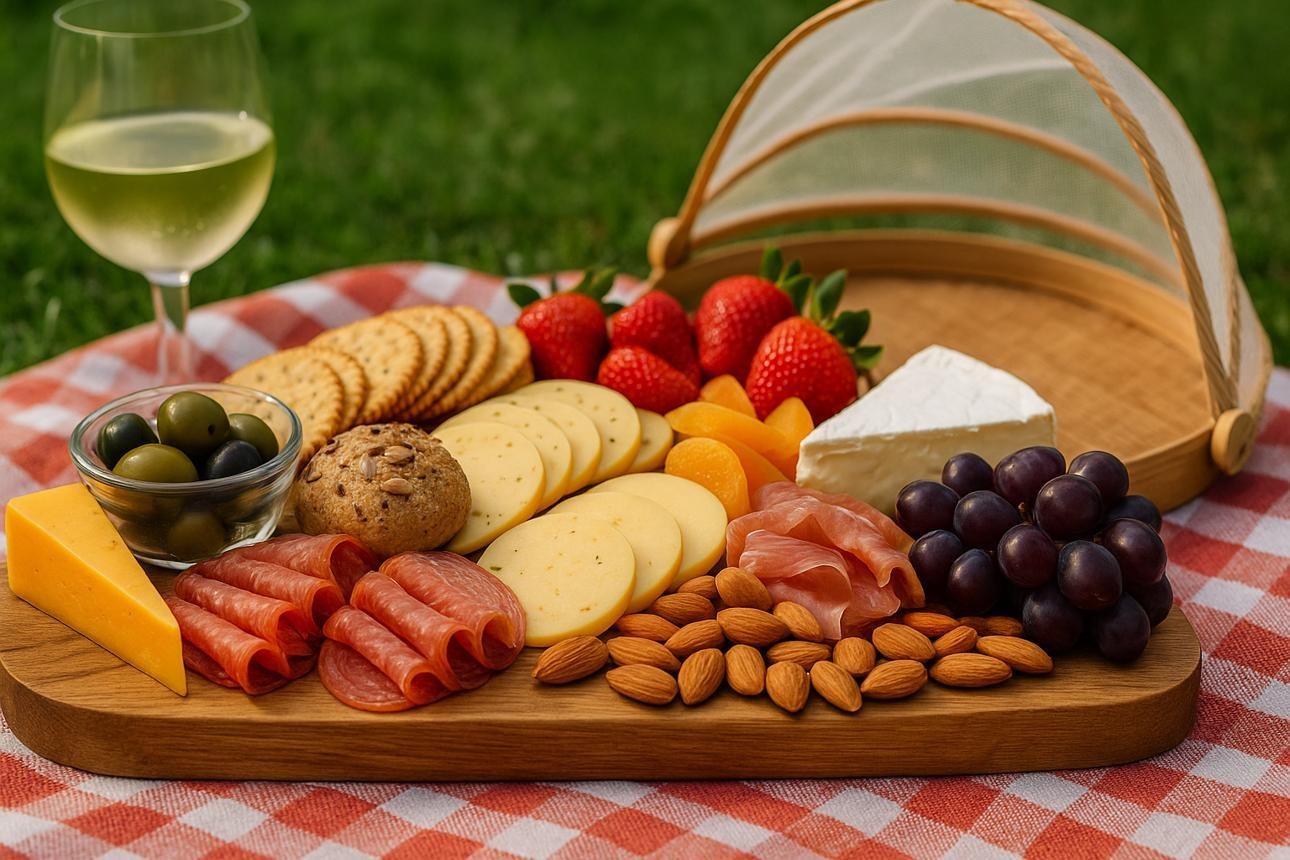
A summer cheese platter might include Brie, Emmentaler, a mild Cheddar and a fresh cheese, accompanied by grapes, berries, cucumber, cherry tomatoes and crusty bread.

For outdoor gatherings, consider serving smaller platters that can be replenished as needed rather than leaving the entire selection outside for an extended period.

Keep cheese refrigerated until shortly before serving, protect it from direct sunlight and return perishable leftovers to the fridge promptly. In warm conditions, follow the two-hour/four-hour food safety rule, counting all time out of refrigeration.

If you’re planning a barbecue, picnic or celebration, our supporting guide to the best cheeses for summer entertaining explores suitable options in more detail.

Beyond the Cheese Platter: Creative Ways to Entertain

Cheese doesn’t have to be limited to a traditional board.

Some of the most memorable gatherings involve dishes where cheese becomes part of the experience.

Raclette Nights

Raclette is an interactive dining experience built around warm, melted cheese.

Traditionally served over potatoes and accompanied by pickles, vegetables and other savoury ingredients, it’s ideal for relaxed dinners where guests can prepare their own combinations.

A Raclette evening is especially enjoyable when you want something different from a conventional dinner party.

Cheese Fondue

Fondue is another classic way to bring people together.

A traditional cheese fondue typically combines melting cheeses such as Gruyรจre and Emmentaler with other ingredients to create a smooth, rich mixture for dipping bread and vegetables.

The communal nature of fondue makes it particularly suitable for small gatherings and celebrations.

Choosing the right cheeses is essential for achieving the desired flavour and texture. Explore our supporting guide to choosing the best fondue cheese for a more detailed explanation.

Baked Brie or Camembert

Baked soft cheese is a simple way to create a warm centrepiece.

Serve it with crusty bread, herbs or a small amount of honey for a dish that’s easy to share.

Check that the cheese is suitable for baking and follow the product’s preparation guidance.

Cheese and Charcuterie Boards

Combining cheese with cured meats, olives, pickles and artisan bread creates a more substantial grazing experience.

Balance salty meats with mild cheeses, fresh fruit and neutral crackers to prevent the flavours from becoming too intense.

Preparing Cheese Before Guests Arrive

Good preparation can make entertaining significantly easier.

Where appropriate, take the cheese out of the refrigerator shortly before serving so its texture and flavour can develop. Many cheeses are best enjoyed when they aren’t refrigerator-cold, but food safety remains important, particularly in hot weather.

Cut larger hard cheeses into manageable portions, leaving some wedges intact for presentation.

Provide separate knives for soft and strong-flavoured cheeses to avoid mixing flavours.

Prepare fruit, crackers and other accompaniments in advance, but add moisture-sensitive items close to serving time so they stay fresh.

If your gathering will run for several hours, keep additional cheese refrigerated and replenish the platter in smaller amounts.

Common Cheese Entertaining Mistakes to Avoid

Even experienced hosts can make a few simple mistakes when planning a platter.

Choosing Too Many Similar Cheeses

A board containing five mild, creamy cheeses may look appealing, but it won’t provide much variety.

Aim for a mixture of textures, flavours and intensities.

Overloading the Platter

A crowded board can make it difficult for guests to serve themselves.

Allow enough room for knives, crackers and easy access to each cheese.

Serving Cheese Too Cold

Very cold cheese can have a firmer texture and less noticeable flavour.

Where safe and appropriate, allow a short period out of the fridge before serving.

Using Too Many Strong Accompaniments

Highly flavoured crackers, spicy chutneys and strong cured meats can overwhelm delicate cheeses.

Include neutral options that allow the cheese to remain the focus.

Forgetting Dietary Requirements

Ask guests about allergies, dietary restrictions and preferences before choosing your selection.

Check individual product labels rather than assuming that every cheese is suitable for vegetarian guests or those with particular dietary needs.

Making Your Cheese Selection Suit the Occasion

The ideal selection depends on the type of event you’re hosting.

For an intimate dinner party, you might focus on three premium varieties and a few carefully matched accompaniments.

For a birthday celebration, a larger grazing board with familiar cheeses, crackers and fruit may be more practical.

For a festive gathering, consider including a specialty Alpine cheese or a warm dish such as fondue.

And for a relaxed afternoon with friends, a simple combination of Brie, Cheddar, grapes and fresh bread may be all you need.

Ultimately, the best cheese selection is one that suits your guests, complements the occasion and allows everyone to enjoy the experience.

Make Your Next Gathering Memorable With Alpine Express

Entertaining with cheese doesn’t need to be elaborate. A thoughtful combination of quality cheeses, complementary accompaniments and simple presentation can turn an ordinary gathering into something special.

Whether you’re creating a classic cheese platter, hosting a summer celebration or planning a traditional fondue night, the right selection makes all the difference.

Contact Alpine Express to explore our cheese selection to discover cheeses for entertaining, sharing and enjoying with family and friends.

Find your favourites and start planning your next cheese-filled gathering.

Posted on

Why Quality Artisan Cheese Is Worth It: The Alpine Express Difference

When you’re used to buying cheese from a supermarket shelf, it’s reasonable to wonder what makes specialist artisan cheese different.

Is it simply a premium version of the same thing?

Not quite.

The value of artisan cheese comes from the product itself, the traditions behind it, the variety available and the experience of discovering cheeses that aren’t designed to taste exactly the same as everything else on the shelf.

For Alpine Express, that means focusing on high-quality Swiss artisan cheese and making an extensive range accessible through an online store.

From familiar varieties such as Gruyรจre and Emmentaler to Raclette, Appenzeller, Tรชte de Moine, Sbrinz and lesser-known Alpine cheeses, the range is designed for people who want to explore beyond everyday cheese.

So, what are you actually getting when you choose quality artisan cheese?

Artisan Cheese Is About Character

Mass-market food is generally designed around consistency.

People want to know that the product they buy this week will taste exactly like the one they bought last week.

Artisan cheese offers something different.

Traditional cheesemaking, different milk sources, ageing and individual production methods can all contribute to the character of the finished cheese.

That is part of the appeal.

Rather than cheese simply providing saltiness, creaminess or something to melt over a meal, it becomes a food worth tasting and exploring in its own right.

Access to Genuine Swiss Cheese

One of the major benefits of shopping with a specialist supplier is access.

Many people know Gruyรจre, Emmentaler and perhaps Raclette, but Swiss cheesemaking extends far beyond these familiar names.

Alpine Express brings together an extensive range of Swiss artisan cheese, including both recognised favourites and varieties that can be much harder to come across during an ordinary grocery shop.

That means customers can move beyond buying “Swiss-style” cheese and explore genuine cheeses from Switzerland.

For someone who genuinely enjoys cheese, that variety has real value.

More Choice Means Finding What You Actually Enjoy

One person’s perfect cheese can be another person’s least favourite.

That’s why choice matters.

Some people prefer mild and approachable flavours.

Others want something aromatic and strong.

Some want a firm aged cheese they can slowly enjoy in small pieces, while others are searching for the perfect cheese to melt.

The Alpine Express artisan cheese selection gives customers the opportunity to choose according to those preferences.

You can explore:

  • classic Swiss cheese
  • aged varieties
  • raw milk cheese
  • hard Alpine cheese
  • Raclette
  • fondue cheese
  • distinctive regional varieties
  • cheese suited to entertaining and gifting.

Instead of treating all cheese as essentially interchangeable, a specialist range lets you find products that suit the way you actually want to eat them.

Individually Cut Cheese Offers Flexibility

Buying specialty cheese shouldn’t mean purchasing more than you need.

Alpine Express offers individually cut cheeses across much of its range, allowing customers to select quantities suited to their needs.

That can be particularly useful when you’re building a cheeseboard.

Rather than buying a huge amount of one cheese, you can select portions of several varieties and create a much more interesting tasting experience.

It also allows people discovering artisan cheese for the first time to experiment.

Try a selection, learn what you enjoy and then return to the varieties that stand out.

The Value of Proper Selection

A specialist cheese store isn’t valuable simply because it has more products.

Selection matters.

Alpine Express focuses specifically on artisan Swiss cheese, meaning the range isn’t trying to cover every possible grocery category.

This creates a much clearer experience for people who are specifically searching for quality Alpine products.

You can start with a cheese you recognise and explore related varieties from there.

Someone who enjoys Gruyรจre might progress towards a longer-matured version.

A Raclette fan might explore different Raclette varieties.

Someone building cheeseboards can combine familiar classics with cheeses their guests are less likely to have experienced before.

This is the advantage of shopping within a focused collection.

Products Designed Around the Way Cheese Is Enjoyed

Cheese isn’t always eaten by simply cutting a slice from a block.

Different varieties have their own traditions and serving styles.

Raclette is designed around melting and sharing.

Fondue turns cheese into a social meal.

Tรชte de Moine can be shaved into distinctive rosettes.

Matured hard cheeses can be enjoyed slowly in smaller pieces.

Alpine Express supports these different experiences with more than just individual cheese varieties.

The wider online range includes products such as cheese boxes, Raclette accessories and fondue products, making it easier to create the experience around the cheese rather than purchasing the cheese in isolation.

Cheese Boxes Make Discovery Easier

Choice is valuable, but sometimes you don’t want to make every decision yourself.

That’s where curated artisan cheese boxes become useful.

A cheese box can introduce customers to multiple products without requiring them to understand every variety before ordering.

They’re also well suited to:

  • gifts
  • entertaining
  • trying artisan cheese for the first time
  • discovering new favourites
  • sharing with family or friends.

For people who know they love cheese but aren’t sure where to start, a thoughtfully selected box can be a much easier entry point than choosing every cheese individually.

Quality Matters Even More for Simple Meals

One of the misconceptions around premium ingredients is that they belong only in complicated meals.

Often, the opposite is true.

The simpler the meal, the more noticeable the quality of the main ingredient becomes.

Think about Raclette.

The concept is beautifully simple: melt quality cheese and enjoy it with uncomplicated accompaniments.

Or consider a cheeseboard containing good bread and a handful of carefully selected cheeses.

There is nowhere for an average ingredient to hide.

When cheese is the main event, choosing a product because of its flavour rather than simply its price can completely change the experience.

Artisan Cheese Makes Entertaining Easier

Quality cheese also has a practical advantage: it doesn’t need much work.

A well-selected cheeseboard can create an impressive centrepiece without hours of cooking.

Raclette allows guests to participate in the meal.

Fondue naturally brings everyone around the same pot.

Tรชte de Moine creates an immediate visual talking point.

That combination of simplicity and experience is one reason cheese works so well when entertaining.

You can focus on choosing a few good products rather than preparing an enormous menu.

Discovering Lesser-Known Cheese

Perhaps the most enjoyable part of a specialist range is finding something you weren’t originally searching for.

Most people don’t need help finding cheddar.

But specialist stores can introduce you to cheese you may never have encountered otherwise.

That process of discovery is where artisan cheese becomes a hobby as much as a food.

You begin recognising the styles you enjoy.

You compare maturation periods.

You discover whether you prefer stronger or milder Alpine cheese.

Eventually, names that once looked completely unfamiliar become favourites.

Convenience Without Giving Up Choice

Traditionally, finding specialist imported cheese could mean tracking down individual delicatessens or hoping your preferred product was available locally.

An online specialist model changes that.

Alpine Express brings the range together in one place so customers can browse different cheeses, compare options and order according to their preferences.

That convenience is especially valuable when you’re looking for something specific.

If you want Raclette for a planned dinner, a particular Gruyรจre or an Alpine variety you’ve enjoyed before, being able to search a dedicated specialist range removes much of the guesswork.

When Is Artisan Cheese Worth Buying?

You don’t need a special occasion.

Quality cheese can be worthwhile whenever the cheese itself matters to you.

That could mean:

A cheeseboard: where every individual variety is tasted by itself.

A dinner party: where you want something guests will remember.

Raclette or fondue: where cheese is the central ingredient.

A gift: for someone who values food and enjoys trying new things.

Your own fridge: because sometimes you simply want better cheese.

The value isn’t about making every meal luxurious.

It’s about choosing a product you genuinely enjoy.

Discover What Makes Alpine Express Different

Good artisan cheese delivers more than another ingredient for the fridge.

It gives you the opportunity to explore different flavours, traditions, textures and ways of eating โ€“ from a matured piece of Gruyรจre to bubbling Raclette shared around the table.

Alpine Express brings a broad range of authentic Swiss artisan cheese together in one convenient online store, making it easier to discover both famous favourites and lesser-known Alpine varieties.

Contact Alpine Express to explore the Alpine Express cheese selection and find a cheese worth slowing down for.

Posted on

The Best Types of Cheese: How to Choose the Right Cheese for Every Occasion

With so many varieties available, choosing the best types of cheese can quickly become overwhelming.

Do you choose something mild or strong? Soft or firm? Young or matured? A familiar favourite or something completely new?

The answer is that there isn’t one “best” cheese.

The best choice depends on what you enjoy and how you plan to serve it.

Whether you’re preparing a cheeseboard, planning a raclette night, looking for something special to cook with or simply want a quality cheese to enjoy at home, understanding the differences between popular varieties can make choosing much easier.

Here are some of the best types of cheese to explore, particularly if you’re interested in traditional Swiss and Alpine varieties.

1. Gruyรจre โ€“ The Versatile Classic

Gruyรจre is an excellent starting point for anyone interested in Swiss cheese.

It’s versatile enough to suit a wide range of occasions while offering the depth of flavour people expect from a quality Alpine cheese.

Depending on its maturation, Gruyรจre can offer different levels of intensity and complexity.

It can be:

  • served on a cheeseboard
  • sliced and enjoyed by itself
  • incorporated into cooking
  • melted into dishes
  • used as part of a fondue.

That versatility makes Gruyรจre an excellent cheese to keep on hand.

Alpine Express offers different Gruyรจre options, allowing cheese lovers to explore how maturation and selection can influence the final flavour.

2. Emmentaler โ€“ The Iconic Swiss Cheese

If there is one cheese almost everyone recognises visually, it is Emmentaler.

Its characteristic holes have become synonymous with Swiss cheese around the world.

But authentic Emmentaler is much more than its appearance.

It offers a distinctive Alpine eating experience and works well for people looking for a versatile cheese that can be enjoyed in multiple ways.

It can work beautifully in sandwiches, cooking and cheeseboards, or simply cut into pieces and enjoyed on its own.

For people who are new to artisan Swiss varieties, Emmentaler can provide a familiar entry point before exploring more unusual cheeses.

3. Appenzeller โ€“ For More Distinctive Flavour

If you’re ready to move beyond milder cheese, Appenzeller deserves a place on your list.

It brings greater aromatic character and can provide excellent contrast on a cheeseboard.

This makes it particularly useful when you’re building a selection.

Rather than choosing three cheeses that taste relatively similar, you can combine an approachable variety with Appenzeller to create more flavour variation.

It’s also an excellent example of why exploring genuine Swiss cheese can be so rewarding. Familiar-looking cheeses can deliver surprisingly different flavours once you move between styles and producers.

4. Raclette โ€“ One of the Best Cheeses for Melting

Some cheeses are versatile.

Raclette has a purpose.

It’s famous for being heated until beautifully melted and then scraped onto food, creating one of Switzerland’s most enjoyable shared dining experiences.

While Raclette can also be eaten without melting, it really comes into its own when heated.

A raclette meal is particularly good for:

  • dinner parties
  • family meals
  • cooler evenings
  • relaxed entertaining
  • anyone who loves melted cheese.

Rather than preparing a complicated meal before your guests arrive, raclette allows everyone to gather around the table and enjoy the experience together.

Alpine Express carries a dedicated Swiss Raclette cheese range, including classic and flavoured varieties.

5. Tรชte de Moine โ€“ The Showstopper

Tรชte de Moine is ideal when you want your cheese selection to look as interesting as it tastes.

Traditionally, it isn’t simply cut into ordinary wedges or slices.

Instead, a special cutter such as a Girolle is used to create thin cheese rosettes.

The result is immediately recognisable and makes Tรชte de Moine an excellent choice for entertaining, celebrations and impressive cheeseboards.

It’s also a reminder that cheese can be an experience rather than simply something to eat.

The way a cheese is cut, served and shared can become part of what makes it memorable.

6. Sbrinz โ€“ For Fans of Matured Hard Cheese

People who love firm, matured cheeses should explore Sbrinz.

Hard Alpine cheeses are particularly appealing when you want concentrated flavour and a firmer texture.

They can be served in smaller pieces on a cheeseboard, incorporated into meals or enjoyed slowly on their own.

Sbrinz also provides a useful contrast when you’re creating a mixed cheese selection.

Pairing a mature hard cheese with softer or more approachable varieties creates much more interest than simply choosing cheeses with similar textures.

7. Vacherin Fribourgeois โ€“ A Different Alpine Experience

Vacherin Fribourgeois gives cheese lovers another way to explore Swiss cheesemaking beyond the best-known varieties.

It’s particularly relevant to people interested in traditional Alpine cheese dishes and looking to expand beyond Gruyรจre, Emmentaler and Raclette.

This is where shopping through a specialist cheese range becomes particularly useful.

You can start with the recognised classics and gradually discover cheeses you may not normally encounter in a standard grocery shop.

What Is the Best Cheese for a Cheeseboard?

Instead of choosing one “best” cheese, aim for contrast.

For example, you could select:

  • one familiar Swiss classic
  • one more aromatic cheese
  • one matured hard cheese
  • one visually interesting or unusual variety.

Gruyรจre could provide the familiar foundation, Appenzeller the stronger personality, Sbrinz the matured element and Tรชte de Moine the visual centrepiece.

You don’t need an enormous number of varieties.

A smaller selection of genuinely different cheeses can create a much more interesting cheeseboard.

What Is the Best Cheese for Melting?

If melting is your priority, Raclette should be high on your list.

It has a long association with the traditional raclette meal and creates the rich, satisfying melted texture that makes the experience so popular.

Fondue is another option when you want to build the entire meal around melted cheese.

Alpine Express also offers ready-made fondue options for customers looking to bring this traditional shared meal to the table more easily.

What Is the Best Cheese for Beginners?

Start with something approachable rather than immediately reaching for the strongest cheese you can find.

Gruyรจre and Emmentaler can both provide excellent introductions to Swiss cheese.

Once you’ve discovered what you like, branch into other styles.

If you find yourself wanting something more aromatic, explore Appenzeller. If you love mature flavours, investigate aged Gruyรจre or Sbrinz. If melted cheese is your favourite part of any meal, head towards Raclette.

There is no requirement to appreciate every cheese.

Finding the styles you genuinely enjoy is the whole point.

How to Compare Different Types of Cheese

When trying several cheeses, think about four characteristics.

Flavour

Does it taste mild, medium or strong to you?

Texture

Is it creamy, elastic, firm or hard?

Aroma

Some cheeses are subtle, while others make their presence known before you’ve even tasted them.

Finish

Pay attention to the flavour after you’ve eaten the cheese. Some disappear quickly, while others leave a long and distinctive finish.

Over time, these simple observations make choosing cheese much easier.

Explore Beyond the Cheese You Already Know

It’s easy to repeatedly buy the same cheese because you know you’ll enjoy it.

But specialist cheese becomes particularly interesting when you use familiar varieties as the starting point rather than the finish line.

If you already enjoy Gruyรจre, try a different maturation.

If you love melted cheese, compare different Raclette varieties.

If your cheeseboard always contains familiar options, add an Alpine cheese you’ve never tried before.

Our complete guide to choosing and enjoying cheese provides a broader introduction to cheese styles, serving ideas and how to build a selection around your preferences.

Find Your Next Favourite Cheese

The best types of cheese aren’t necessarily the most famous or the strongest.

They’re the ones you look forward to eating again.

Alpine Express brings together a wide selection of artisan Swiss cheese, from recognizable classics such as Gruyรจre and Emmentaler through to Raclette, Appenzeller, Tรชte de Moine, Sbrinz and lesser-known Alpine varieties.

Explore the Alpine Express cheese selection and start discovering which varieties deserve a permanent place in your fridge.

Posted on

Cheese: The Complete Guide to Choosing, Enjoying and Buying Quality Cheese

Cheese can be simple enough to enjoy on a slice of bread and complex enough to become the centrepiece of an entire meal. From mild, creamy varieties through to firm, matured cheeses with deep and distinctive flavours, there is an enormous world to explore.

For cheese lovers, the challenge is often not finding cheese, but knowing what to choose.

Different varieties offer completely different textures, aromas and flavour profiles. Some are ideal for melting, some shine on a cheeseboard, while others are best enjoyed on their own with very little accompaniment.

At Alpine Express, the focus is on bringing carefully selected artisan Swiss cheese to people who appreciate quality, authenticity and flavour. Rather than treating cheese as simply another grocery item, the Alpine Express range gives customers the opportunity to discover traditional favourites and lesser-known Alpine varieties.

Whether you’re building a cheeseboard, preparing fondue or raclette, searching for a gift or simply want something special for the fridge, understanding the different types of cheese makes choosing much easier.

What Makes Great Cheese?

There isn’t one single characteristic that defines great cheese.

What makes one variety exceptional can be completely different from another. A beautiful soft cheese might be appreciated for its creamy texture, while an aged hard cheese might stand out because of its concentrated flavour and firm structure.

Quality cheese is influenced by the milk, cheesemaking methods, ageing process and the care taken throughout production and storage.

This is particularly noticeable with artisan cheese. Traditional cheesemaking focuses on developing flavour and character rather than simply producing something uniform.

The result is a product with its own identity.

For the person eating it, however, the most important question is much simpler:

Does it taste good, and is it right for how you want to enjoy it?

That is why learning a few basic cheese styles can make such a difference.

Understanding the Main Types of Cheese

There are countless individual varieties, but understanding several broad styles makes navigating a cheese selection much easier.

Hard and Aged Cheese

Hard cheeses tend to have a firmer texture and more concentrated flavour.

Ageing allows flavour to develop over time, often creating savoury, nutty, slightly sweet or intensely aromatic characteristics.

Swiss varieties such as Gruyรจre and Sbrinz are excellent examples of cheeses that can develop significant complexity through maturation.

Hard cheese is incredibly versatile. Depending on the variety, it can be:

  • enjoyed by itself
  • sliced onto a cheeseboard
  • grated over meals
  • incorporated into cooking
  • paired with bread, fruit and condiments.

If you enjoy stronger and more developed flavours, exploring matured cheeses is an excellent place to start.

For a closer look at different varieties, read our guide to the best types of cheese and how to choose between them.

Semi-Hard Cheese

Semi-hard cheese sits somewhere between softer styles and very firm aged cheeses.

These cheeses can offer a fantastic balance between texture and flavour. They are often easy to slice and can range from approachable and mild through to aromatic and full-flavoured.

Swiss cheesemaking is particularly well known for this category.

Appenzeller is a great example. It offers the recognisable satisfaction of an Alpine cheese while providing a distinctive flavour that separates it from more everyday supermarket varieties.

Semi-hard cheeses are excellent for people beginning to explore artisan cheese because there is so much variety within the category.

Cheese for Melting

Some cheese is good when melted.

Other cheese seems as though it was created for it.

Raclette is one of the most recognisable examples.

The cheese is traditionally heated until beautifully soft and melted, then served with simple accompaniments such as potatoes and vegetables.

The beauty of raclette is that the cheese remains the star of the meal.

It also transforms eating into a social experience, making it a popular option when entertaining friends or family.

Alpine Express offers a dedicated range of Swiss raclette cheese, including classic and other flavour variations.

Fondue provides another distinctly Alpine way to enjoy cheese. Rather than simply adding melted cheese to another dish, fondue turns cheese into the meal itself, creating something designed to be shared around the table.

Raw Milk and Artisan Cheese

One of the reasons people begin exploring specialist cheese is the opportunity to experience varieties produced differently from mass-market products.

Raw milk cheese is made using milk that has not been pasteurised before cheesemaking.

For cheese enthusiasts, traditional raw milk varieties can offer fascinating depth and individuality.

Alpine Express specialises in artisan Swiss cheese and carries a broad selection that includes traditional raw milk varieties alongside other carefully selected cheeses.

For customers accustomed to standard supermarket cheese, discovering artisan varieties can completely change their understanding of how diverse cheese can be.

Why Swiss Cheese Offers So Much Variety

Mention Swiss cheese and many people immediately picture Emmentaler and its famous holes.

But Swiss cheese extends far beyond one style.

Switzerland has a rich cheesemaking culture that includes cheeses made for melting, ageing, slicing, scraping and sharing.

Gruyรจre AOP offers a completely different experience from Emmentaler AOP. Appenzeller brings another flavour profile again, while Tรชte de Moine has its own distinctive presentation and eating experience.

Then there are lesser-known Alpine varieties that allow adventurous cheese lovers to move beyond the familiar classics.

That diversity is part of what makes exploring Swiss artisan cheese so enjoyable.

You don’t necessarily need to understand every region, production method or ageing period. Start with the flavours and textures you already enjoy and explore from there.

Popular Swiss Cheese Varieties Worth Discovering

Gruyรจre

Gruyรจre is one of the most recognised Swiss cheeses and a fantastic starting point for anyone exploring quality Alpine cheese.

It can be enjoyed on a cheeseboard, used in cooking or incorporated into traditional melted cheese dishes.

Different maturation periods can create noticeably different eating experiences, which means Gruyรจre itself offers plenty to explore.

Emmentaler

Emmentaler is perhaps the cheese many people imagine when they hear “Swiss cheese”.

It is recognisable by its characteristic holes and is a versatile option for eating, cooking and cheeseboards.

If you’ve mainly experienced mass-produced versions before, authentic Swiss Emmentaler is worth discovering.

Appenzeller

For people ready to explore something with a little more personality, Appenzeller is an excellent option.

Its distinctive flavour makes it a great addition to a cheeseboard, particularly when paired with cheeses of different intensities.

Tรชte de Moine

Tรชte de Moine provides an experience that is both visual and flavour-focused.

Rather than simply cutting it into traditional slices, the cheese is famously shaved into delicate rosettes using a specialised cutter such as a Girolle.

That makes it particularly appealing for entertaining and special cheeseboards.

Raclette

Raclette is made for sharing.

Melt it, scrape it and enjoy it alongside simple accompaniments. It is comforting, social and unmistakably Alpine.

For anyone interested in creating a genuine raclette experience, starting with authentic Swiss Raclette cheese makes all the difference.

How to Choose Cheese for a Cheeseboard

A great cheeseboard doesn’t need ten different varieties.

In fact, choosing a smaller number of contrasting cheeses can often create a better experience.

Think about variety across:

Texture: Include different levels of firmness.

Flavour: Balance approachable flavours with something more distinctive.

Age: Mixing younger and matured cheese creates contrast.

Presentation: A visually interesting cheese such as Tรชte de Moine can become a centrepiece.

Three or four well-chosen varieties can provide plenty of variety without overwhelming the people eating them.

Add simple accompaniments such as good bread, crackers, fruit or suitable condiments and allow the cheese itself to remain the focus.

How Much Cheese Should You Buy?

The right amount depends heavily on how you plan to serve it.

If cheese is one component of a larger meal, you will generally need less than if you’re creating a dedicated cheeseboard or raclette dinner.

Think about:

  • how many people you are serving
  • whether cheese is a starter or main feature
  • how many varieties you’re offering
  • whether other substantial food will be served.

Buying individually cut cheese also makes it easier to choose quantities that suit the occasion rather than purchasing an entire wheel or oversized portion.

How to Store Quality Cheese

Once you’ve invested in good cheese, storing it properly helps protect its texture and flavour.

Cheese generally needs refrigeration, but wrapping is also important.

Rather than leaving cut artisan cheese exposed to air, keep it appropriately wrapped and refrigerated. Good storage helps prevent it from drying excessively while allowing you to enjoy the product over time.

Before serving, certain cheeses can also benefit from being removed from the refrigerator for a short period so their texture and flavour can become more expressive.

The key is to treat artisan cheese as a fresh food product rather than something that can simply be forgotten at the back of the fridge.

Choosing Cheese Based on the Occasion

One of the easiest ways to narrow down your choices is to start with what you’re planning.

For an Everyday Treat

Choose something versatile that you can enjoy in several ways.

Gruyรจre, Emmentaler or another Alpine cheese that works both by itself and in meals can be a practical option.

For Entertaining

Look for contrast and presentation.

Combine familiar varieties with something guests may not have tried before. Tรชte de Moine can add visual interest, while a matured Alpine cheese can provide greater flavour intensity.

For a Shared Dinner

Raclette and fondue are difficult to beat.

Both make cheese the focus of the evening rather than simply another ingredient.

For a Gift

A curated selection removes much of the guesswork.

Alpine Express offers artisan cheese boxes and packs containing carefully selected products, making them a convenient option for cheese lovers and special occasions.

Why Buying Specialist Cheese Is Different

Shopping for specialist cheese isn’t simply about buying a more expensive version of something available at the supermarket.

It’s about access to different producers, varieties, maturation styles and traditional products.

A specialist range also makes discovery easier.

Instead of being limited to the most recognisable varieties, you can explore cheeses that you may never have encountered before.

Alpine Express was created specifically around this idea: making high-quality Swiss artisan cheese more accessible through an online store.

The range includes internationally recognised classics alongside lesser-known Alpine cheeses, giving both new and experienced cheese lovers something to discover.

Read more about what makes Alpine Express artisan cheese worth exploring and how the range is selected and delivered.

Finding Your Favourite Cheese

You don’t need to become a cheese expert before you start exploring.

The best approach is simply to pay attention to what you enjoy.

Do you prefer mild or strong flavours?

Creamy or firm textures?

Young cheese or matured cheese?

Something for slicing or something designed to melt?

Each answer helps narrow the enormous world of cheese into a selection that suits you.

From there, try different producers, ageing periods and varieties. You may begin with Gruyรจre or Emmentaler and eventually discover that your favourite is an Alpine cheese you had never heard of before.

That process of discovery is a large part of the enjoyment.

Discover Cheese Worth Getting Excited About

Great cheese can turn a simple snack into something memorable, transform a shared dinner and introduce you to generations of Alpine cheesemaking tradition.

Whether you already know exactly what you’re looking for or you’re ready to discover something new, Alpine Express makes it easy to explore authentic Swiss favourites and artisan varieties.

Browse the Alpine Express cheese selection to discover Gruyรจre, Emmentaler, Appenzeller, Raclette, Tรชte de Moine, artisan Alpine cheeses and more, individually cut and ready to enjoy.

Posted on

The Complete Guide to Buying a Raclette Grill in Australia

You’ve already decided raclette is your thing. You’ve sat around someone else’s table, watched the cheese bubble and brown under the grill, and thought: I’m doing this at home. Now you’re looking at six different machines, a handful of accessories, and a rental option, and the specs are starting to blur together.

This guide maps every raclette machine in the Alpine Express range to the three situations we see most often: the couple’s night in, the family gathering, and the party host. We’ll cover dimensions, wattage, cheese format, total cost, and the honest case for renting before you commit. By the end, you’ll know exactly which machine suits your kitchen, your guest count, and your cheese preferences.

Before we get into specs, there’s one question worth answering first.


Which Situation Are You Shopping For?

Most people land on the wrong machine because they shop for the situation they imagine rather than the one they actually live. A quick self-assessment before you read any specs will save you a lot of scrolling.

The Couple or Small Group (1 to 4 guests, light meals, storage-conscious)You’re cooking for two most of the time, occasionally stretching to four. You want the experience without dedicating a shelf in the cupboard to it. Storage footprint matters to you, and you’d rather spend more on great cheese than on a machine you’ll only use at half capacity.

The Family Host (4 to 6 guests, main meals, authenticity matters)You host sit-down dinners regularly, and you want the real thing: a half wheel of Swiss raclette melting under the grill, scraped tableside while everyone watches. You’re willing to invest in a machine that delivers that experience properly, and you’ll use it often enough to justify it.

The Party Planner (8 or more guests, social melting, convenience first)You host large gatherings, or you’re planning one big event. You want a machine that can keep up with a crowd without requiring you to manage a half wheel at the same time as the conversation. Capacity and ease of use matter more to you than strict tradition.

Find yourself in one of these and skip straight to the bundle that matches. If you’re genuinely between two profiles, read both sections. The cheese format comparison in Section 4 will help you decide.


Every Alpine Express Machine, Side by Side

Here’s the full range. Every machine we stock, with the specs that matter for your decision.

Model Dimensions (H ร— Base cm) Wattage Guests Cheese Format SKU Price
Ambiance Raclette Machine for 1/2 Wheels 32 ร— 48 ร— 27 1000W* 2 to 4 1 ร— half wheel 999502 $681.00
Super Raclette Machine for Two 1/2 Wheels 35 ร— 52 ร— 28 1000W* 4 to 8 2 ร— half wheels 999503 $959.00
Convivial Raclette Grill for Blocks 22 ร— 34 ร— 17 450W* 2 to 4 Block (max 18 ร— 9 cm) 999504 $399.00
8 Person Indoor & Outdoor Raclette Grill by Swissmar 16 ร— 47.4 ร— 25 1900W 8 Block / slice SH75905 $227.00
Brio Plus Raclette Machine for Two 1/2 Wheels (Gas Operated) 40 ร— 52 ร— 28 2600 to 3400W* 4 to 8 2 ร— half wheels 999512 $1,511.00
Easy Gas Raclette Machine for 1/2 Wheels (Gas Operated) 32 ร— 43 ร— 28 2000 to 2500W* 2 to 4 1 ร— half wheel 999511 $890.00

Important notes before you order:

  • Super (SKU 999503) is currently out of stock and requires a special import order placed manually via contact with Alpine Express. It is not a standard add-to-cart purchase.
  • 8 Person Indoor & Outdoor Raclette Grill by Swissmar (SKU SH75905) is currently available on back-order.
  • Brio Plus (SKU 999512) is currently available on back-order and requires manual ordering.
  • Easy Gas (SKU 999511) is currently out of stock. It is also restricted to outdoor use only and must never be operated inside your home or enclosed space.
  • Brio Plus and Easy Gas do not include a pressure regulator or hose. These must be sourced separately before first use.
  • *Wattage figures for TTM machines (Ambiance, Super, Convivial, Brio Plus, Easy Gas) are listed as per product specifications. Verify against current product pages before purchase. Swissmar Verso wattage (1900W) is confirmed on the product page.

What each machine is designed for

Ambiance ($681) is the core workhorse for anyone who wants the authentic half-wheel experience at home. It holds a single half wheel, tilts to keep the cheese face angled correctly under the 1000W element, and is built for regular use. If you’re the Family Host profile and you host 2 to 4 guests for sit-down raclette dinners, this is the machine most people in that situation end up with. It’s in stock, it ships with an Australian power plug, and the 2-year warranty covers material and production faults.

Convivial ($399) is the entry point for anyone who wants a genuine raclette experience without the price tag or storage footprint of a half-wheel machine. It holds pre-cut blocks (up to 18 cm long, 9 cm high) and sits at 22 cm tall with a base plate of 34 ร— 17 cm. For two people who host occasionally and want to keep things simple, this is the most practical machine in the range.

8 Person Indoor & Outdoor Raclette Grill by Swissmar ($227) is the most affordable machine for large groups. At 1900W and designed for eight people, it comes with eight heat-resistant spatulas and eight raclette dishes included in the box. It works with pre-cut cheese and is certified for both indoor and outdoor use. If you’re hosting a crowd and convenience matters more than tradition, this is worth considering. Note it is currently on back-order.

Super ($959) holds two half wheels simultaneously, making it suited to longer gatherings where you want continuous melting capacity across six to eight guests. The cast aluminium and natural stone base adds stability and a premium feel. It is currently out of stock and requires a special import order. If you’re considering it, contact Alpine Express directly.

Brio Plus ($1,511) is the gas-powered version of the Super format: two half wheels, indoor and outdoor approved, and capable of 2600 to 3400W output. It is designed for hosts who want the full authentic experience in spaces without easy power access, or who want the performance of gas at a large outdoor gathering. It is currently on back-order, requires manual ordering, and does not include a gas regulator or hose.

Easy Gas ($890) is the portable, gas-powered single half-wheel machine. It is outdoor use only, comes with a backpack that includes an insulated case for your half wheel, and runs on commercially available butane or propane. It is currently out of stock. Do not consider it for indoor entertaining.


Three Bundles, Real Prices

The machine price is only part of what you’ll spend to host your first raclette night. Here’s what each use case actually costs, with the cheese and accessories included.

Bundle 1: The Couple’s Night In

Machine:  Convivial Raclette Grill for blocks 

ItemDetailPrice
Convivial Raclette Grill for blocks450W, block format, 3.6 kg$399.00
Swiss Raclette Classic (sliced)300g, light meal for 2 (150g per person)~$18.90
Total (+ shipping)~$422.90

The Convivial includes a non-stick grill plate and a 360-degree swivel arm for the cheese holder. No additional accessories are required to get started. The machine packs down to 38 ร— 27 ร— 24 cm and weighs 3.6 kg, so it fits in a standard kitchen cupboard without rearranging anything.

Swiss Raclette Classic is pasteurised, gluten-free, and lactose-free with a mild, creamy flavour. It’s a good starting point if you’re new to cooking raclette at home.

At this order size, the  Alpine Pass  ($99/year for free shipping on orders $150 or more) is unlikely to pay back quickly. Standard shipping applies.


Bundle 2: The Family Gathering

Machine:  Ambiance Raclette machine for 1/2 wheels 

ItemDetailPrice
Ambiance Raclette machine for 1/2 wheels1000W, holds 1 ร— half wheel, 5.4 kg$681.00
Swiss Raclette Classic (half wheel)1 kg, main meal for 5 (200g per person)$63.00
PF-1 Single Cheese HolderSpare holder, compatible with Ambiance$141.00
Total (+ shipping)~$890.00

The 10% discount on raclette cheese that comes with your machine purchase must be placed as a separate order after you complete the machine checkout. It cannot be combined in the same transaction. After the discount, your cheese drops to approximately $56.70, bringing the total to around $878.70.

The  PF-1 Single Cheese Holder  is worth adding from the start. It gives you a spare if the included holder ever needs replacing, and it is compatible with the Ambiance.

If you’re planning to order cheese regularly, the ย Alpine Passย  makes sense here. At $99 per year, free shipping on orders of $150 or more pays back after approximately 5โ€“6 orders, given standard delivery runs from $5 for larger orders over $300.


Bundle 3: The Party Host

Two honest options, depending on what you’re optimising for.

Option A: The Social Melt (Budget-friendly, block format)

Machine:  8 Person Indoor & Outdoor Raclette Grill by Swissmar Best for: 8 guests, convenience, indoor or outdoor use

ItemDetailPrice
8 Person Indoor & Outdoor Raclette Grill by Swissmar1900W, includes 8 spatulas and dishes$227.00
Swiss Raclette Classic (sliced)2 kg, main meal for 8 (250g per person)~$126.00
Raclette knifeDual-function stainless steel blade, rosewood handle$59.00
Total (+ shipping)~$417.00

The Swissmar Verso includes everything you need for eight people in the box. No additional dishes or spatulas required. It is currently on back-order, so confirm availability before ordering. The Swissmar Verso is designed for pre-cut block and slice formats only. It does not accommodate half wheels. Its 1900W element and included eight-dish setup make it suited to social, high-capacity entertaining.

Option B: The Authentic Two-Wheel Experience

Machine:  Brio Plus Raclette Machine for two 1/2 wheels (gas operated) 

ItemDetailPrice
Brio Plus Raclette Machine for two 1/2 wheels (gas)2600 to 3400W, holds 2 ร— half wheels$1,511.00
Swiss Raclette Classic (half wheels)2 ร— approx. 1.5 kg (2 kg total for 8 guests at 250g each)~$126.00
PF-2 Combi Cheese HolderDouble holder, compatible with Brio Plus$198.00
Total (+ shipping)~$1,840.00

The Brio Plus does not include a gas regulator or hose. Budget an additional $30 to $60 to source these separately before your first use. After the 10% cheese discount on a separate order, your cheese cost drops to approximately $113.40, bringing the total to around $1,822.40 plus the gas components.

The Brio Plus is currently on back-order and requires manual ordering through Alpine Express. If you’re considering this machine, contact the team directly to discuss lead times.


Half Wheel or Block? What the Cheese Format Actually Means

This is the decision most buyers don’t realise they’re making until they’ve already ordered. It shapes the type of experience you’ll have, the cheese you’ll buy, and the machine you’ll need.

The half-wheel experience

With a half-wheel machine (Ambiance, Super, Brio Plus, Easy Gas), a whole half wheel of Swiss raclette sits in the cheese holder, angled face-down toward the heating element. As the surface melts, you scrape it directly onto your guests’ plates. The wheel stays warm and continues melting throughout the meal. You scrape as you go. It is interactive, slow, and social in the best way. This is the traditional method found in Swiss chalets and mountain restaurants, and it is the reason raclette has the reputation it does.

The cheese cost for half-wheel format starts at $63.00 per kilogram for Swiss Raclette Classic. Buying in bulk half-wheel format is generally more economical per kilogram than pre-sliced portions. Verify current format availability and pricing on the Alpine Express website before ordering.

Half wheels require a little more preparation. They need to be kept at the right temperature before use and stored properly between sessions. They are larger than a block of sliced cheese, so you’ll want to plan your fridge space accordingly.

The block and slice experience

With a block or slice machine (Convivial, Swissmar Verso), pre-cut portions of cheese sit on the grill plate and melt from below. It is faster to set up, easier to portion for a crowd, and requires no special preparation beyond having the cheese ready to go. For a large group where you’re managing conversation and food simultaneously, this format is genuinely easier to run.

The trade-off is a different feel. You’re melting slices, not scraping a wheel. For some hosts, that distinction matters enormously. For others, it doesn’t matter at all, and what matters is that everyone at the table has melted cheese on their plate and is having a good time.

Neither format is inferior. They are different priorities. If the ritual of the half wheel is part of why you want to host raclette at home, a block machine will always feel like a compromise. If you want a relaxed, social meal where the cheese is delicious and the setup is simple, a block machine delivers exactly that.

Matching format to your profile

If you identified as the Couple or Small Group and you’re looking at the Convivial, you’re on the block path. That is a completely valid choice for two people who want a low-fuss, regular raclette night without the storage commitment of a larger machine.

If you identified as the Family Host and you’re considering the Ambiance, the half-wheel experience is exactly what that machine is built for. The $282 price difference over the Convivial buys you the authentic scraping ritual and the ability to use full Swiss half wheels.


Buy or Rent? The Honest Comparison

The Alpine Express  raclette machine hire service  was designed for a specific host: someone who wants to test the raclette experience before committing to a machine. If you’ve never hosted a raclette night at home and you’re not sure whether it will suit your entertaining style, renting before buying is a genuinely smart move. It also makes sense for one-off events where the machine is unlikely to see regular use afterward. A birthday dinner, a pre-Christmas gathering, a special occasion that doesn’t reflect your usual hosting pattern all fit this category.

What the rental includes and costs

The rental program is currently available for the Ambiance model only. The Super, Convivial, Swissmar Verso, Brio Plus, and Easy Gas are not available to rent. If you know you want a two-wheel machine or a gas-powered unit, buying is your only option.

A seven-day rental runs at $290 including GST, from the date of pick-up or arrival. A $550 bond applies on top of the rental fee. This is a significant upfront cost to plan for: your total outlay before the rental period begins is $840, with the bond returned after the machine comes back in good condition. Pick-up is free from Brisbane/Milton in Queensland. If you need the machine shipped, a flat $50 courier rate applies for most East Coast metro addresses. You can add the  PF-2 Combi Cheese Holder  for $95 if you’re cooking for a larger group and want to test the double-holder setup.

When buying makes more sense

The maths tip in favour of buying once you’re hosting three or more raclette nights per year. The  Convivial  at $399 is roughly the equivalent of one and a half rentals. Host twice in a year and you’ve recouped the purchase price. Host three times and you’re ahead, with no return deadlines, no bond to manage, and the machine sitting in your cupboard ready for the next one.

One other option worth watching: Ambiance ex-rental machines occasionally appear in stock at $449, compared to $681 for a new unit. These are used once, cleaned, checked, and sold in “as new” condition with a standard warranty. Availability is unpredictable, but if you’re drawn to the Ambiance and budget is a consideration, it’s worth checking the  Alpine Express product listings  periodically.

The simple heuristic: Three raclette nights per year is the threshold. Below that, rent and see how it feels. Above that, buy the machine that matches your use case and use it.


Safety and Care: What to Know Before You Switch On

A few straightforward habits will keep your machine running well for years and keep your 24-month warranty intact.

Safety

  1. Before plugging in, confirm your outlet matches 230V. All Alpine Express electric models (Ambiance, Super, Convivial, and the Swissmar Verso) operate at 230V and come with an Australian power plug.
  1. If you’ve chosen the Brio Plus or Easy Gas, the pressure regulator and hose are not included. Source these separately and follow the gas connection instructions carefully before first use.
  1. Never leave a running raclette machine unattended, particularly gas-powered units where an accidental bump could affect the flame or gas connection.
  1. The Easy Gas is outdoor use only. Never operate it inside your home or any enclosed entertainment area.
  1. When using any gas-powered machine, ensure adequate ventilation. Do not use gas machines in poorly ventilated spaces.

Cleaning and Care

  1. Allow the machine to cool completely before cleaning. The heating elements and stone base on machines like the Super and Brio Plus retain heat longer than you’d expect.
  1. Clean non-stick grill plates with a soft sponge only. Avoid abrasive cleaners, and never put any components in the dishwasher. Dishwasher damage is explicitly excluded from the manufacturer warranty.
  1. After each use, remove cheese residue from the cheese holders and scraping knife. A quick clean after every session prevents buildup that affects both performance and the flavour of your next gathering.
  1. Store your machine in a dry location. The Swissmar Verso is water-resistant. The TTM electric machines (Ambiance, Super, Convivial) and the gas models are not designed for outdoor storage.

On warranty: All Alpine Express raclette machines are covered by a 24-month manufacturer warranty backed by The Red Cow, covering material and production faults. Alpine Express facilitates the warranty process. Damage from improper handling or care is excluded, which is why the cleaning steps above matter. Burnt-out heating elements on the Ambiance and Super after more than 1,000 hours of use are also excluded from warranty coverage. For a home entertainer hosting a handful of times per year, that threshold is not a practical concern.


Your Decision: Which Machine Is Right for You?

You’ve seen the specs, the bundles, the cheese format tradeoffs, and the rental alternative. Here’s where it lands.

Choose the  Convivial  ($399) if you’re hosting one or two people, you want a light meal experience, storage space is limited, or you’re not yet sure how often you’ll use a raclette machine. It’s the lowest-commitment entry point that still delivers a genuine raclette experience.

Choose the  Ambiance  ($681) if you want the authentic half-wheel experience, you typically host two to four guests for main meal gatherings, and you value the social ritual of scraping a whole wheel at the table. This is the machine most Family Host profiles end up with, and it’s the right investment for anyone who’ll use it regularly.

Choose the  Swissmar Verso  ($227) if you regularly host eight or more guests, convenience and capacity matter more than strict tradition, and you want a machine that works both indoors and outdoors. At $227, it’s also the most accessible entry point for a large group. Note it is currently on back-order.

Choose the  Brio Plus  ($1,511) if you want the full authentic two-wheel experience, you host four to eight guests regularly, and you want the performance of gas for outdoor entertaining or spaces without easy power access. Budget for the gas regulator and hose separately. Currently on back-order, requires manual ordering.

Rent the  Ambiance  ($290 for 7 days) if you’re hosting a one-off event or you genuinely aren’t sure whether raclette will become a regular fixture in your entertaining rotation. Budget $840 total for the rental week ($290 rental fee plus $550 bond), with the bond returned after the machine comes back in good condition.


Browse the full Alpine Express raclette machine rangeย  with current pricing, dimensions, and availability, or pair your machine with the right cheese pack for your first gathering.